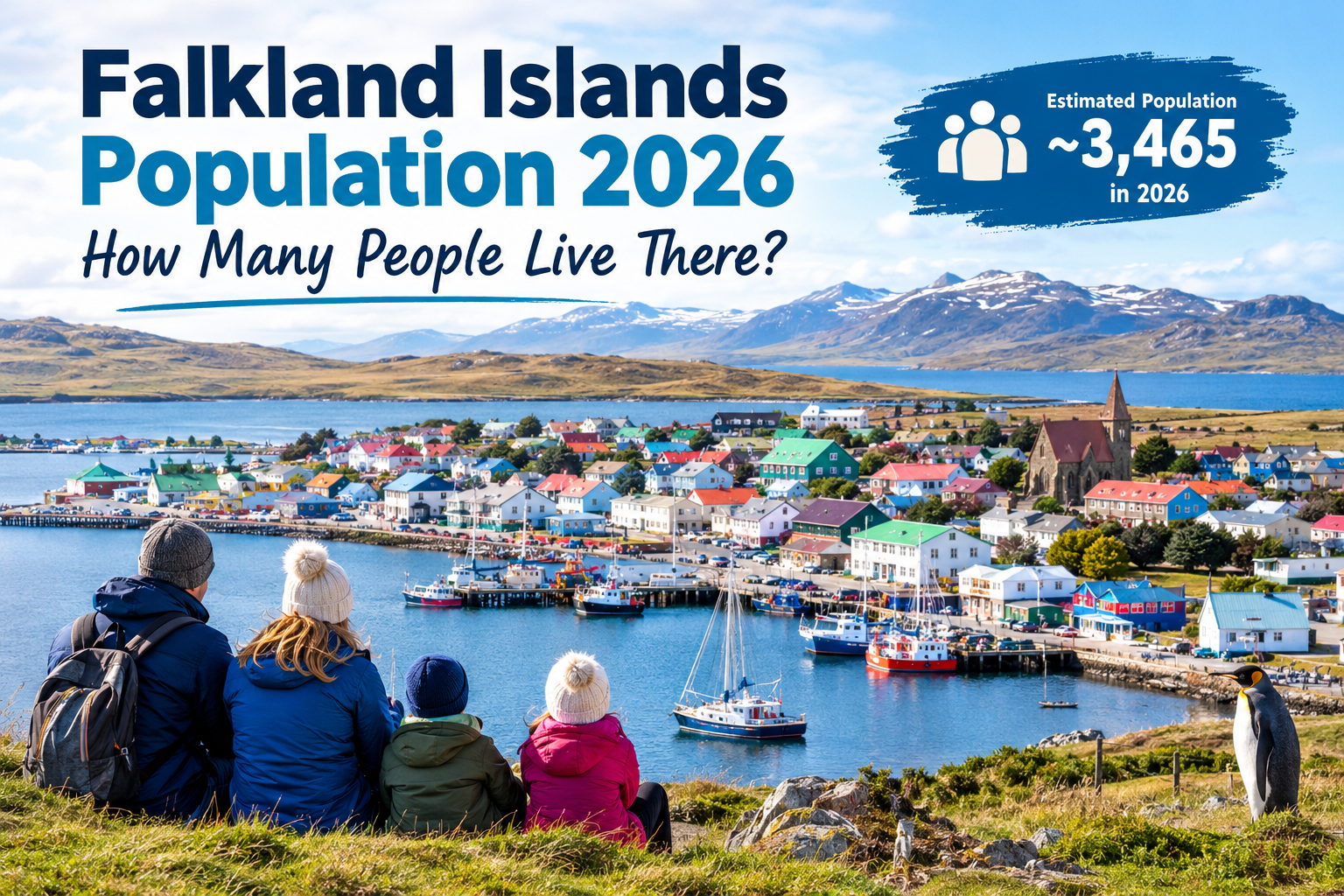
The Falkland Islands are among the most remote inhabited islands in the South Atlantic Ocean. Known for their spectacular coastlines, beautiful landscapes, sheep farms, and remarkable penguin colonies, these islands attract travelers who want to experience a destination far away from crowded cities. But one question often comes to mind before visiting: How many people live in the Falkland Islands in 2026?
The Falkland Islands have a small but diverse population. According to the official Falkland Islands Government, the 2021 census recorded 3,662 usually resident people. More recent international demographic estimates put the population at approximately 3,465 in 2026. These figures use different statistical methods, so the 2026 figure should be treated as an estimate rather than a new official census count.
In this guide, we will explore the Falkland Islands population in 2026, where people live, the community’s cultural background, population history, and what makes life in this remote destination unique.
1. What Is the Falkland Islands Population in 2026?
The estimated population of the Falkland Islands in 2026 is approximately 3,465 people, based on United Nations population projections. The most recent official census figure published by the Falkland Islands Government remains the 2021 count of 3,662 usually resident people.
It is important to understand that a census and a population projection are not exactly the same. A census counts people according to defined residency rules, while projections estimate population changes between official counts.
Here are the key population facts:
- Estimated population in 2026: Approximately 3,465 people, based on international projections.
- Official 2021 census population: 3,662 usually resident people.
- Average age in the 2021 census: 40 years.
- Main settlement: Stanley, the capital.
- Population distribution: Most residents live in Stanley, while others live in rural areas known as Camp and on the Outer Islands.
- Cultural background: The community includes people with roots in Britain, Saint Helena, Chile, the Philippines, and other countries.
These figures demonstrate how small the population is compared with many other destinations. The islands’ remote location, climate, and economic structure all influence where people live and how the community develops.
2. Where Do Most People Live in the Falkland Islands?
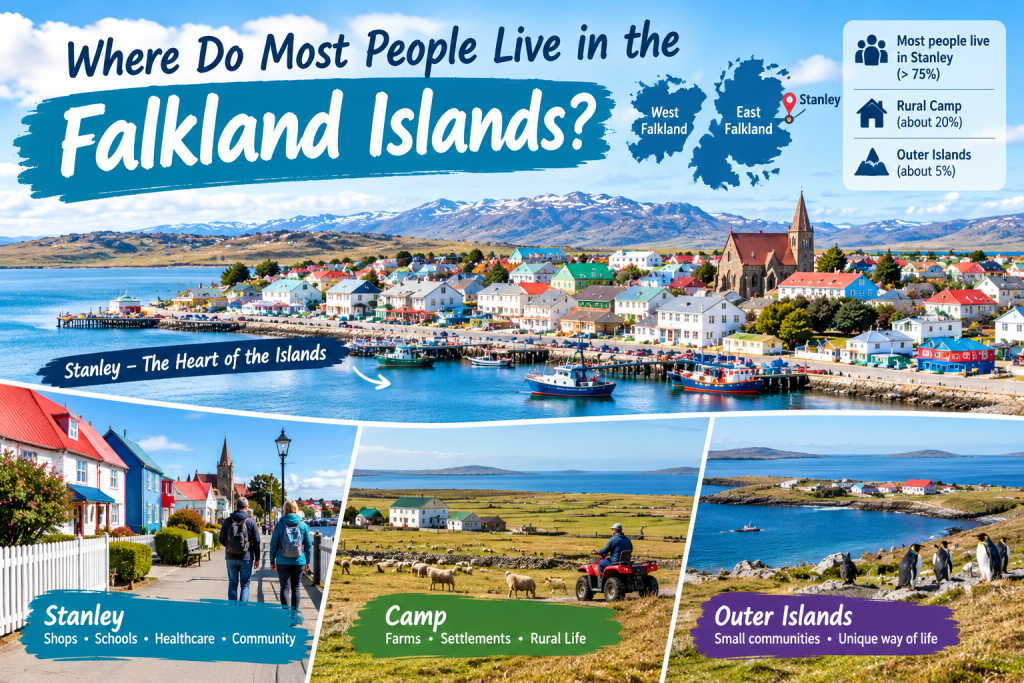
Although the Falkland Islands cover a substantial geographical area, most residents live in and around Stanley. The remaining population is spread across rural settlements, farms, and smaller islands.
Stanley: The Population Center
Stanley is the capital and largest settlement of the Falkland Islands. It is the center of government, commerce, education, healthcare, and many community activities.
The town is known for its colorful buildings, waterfront views, historic sites, and welcoming atmosphere. Visitors can explore attractions such as Christ Church Cathedral, the Whalebone Arch, the Falkland Islands Museum, and the waterfront.
Stanley also provides many of the services that residents need in their daily lives. Shops, schools, public facilities, accommodation, and restaurants are concentrated here, making it the most convenient place for many residents to live and work.
The Falkland Islands Government reports that more than three-quarters of the population live in Stanley. This concentration makes the capital especially important to the islands’ economy and social life.
Camp: Life Beyond the Capital
In the Falkland Islands, the term Camp refers to rural areas outside Stanley. The word comes from the Spanish term campo, meaning countryside.
Camp includes sheep farms, remote settlements, and communities across East Falkland, West Falkland, and the Outer Islands. Residents often work in agriculture, livestock management, tourism, transport, conservation, and other rural industries.
Living in Camp offers a very different experience from living in Stanley. Houses and settlements can be separated by considerable distances, and residents may need to plan carefully for travel, supplies, and access to services.
For visitors, these rural areas provide opportunities to experience the islands’ open landscapes, wildlife, traditional farming, and peaceful surroundings.
3. Why Is the Falkland Islands Population So Small?
Several geographical, historical, and economic factors help explain why the Falkland Islands have such a small population.
Remote Location
The Falkland Islands lie in the South Atlantic Ocean, approximately 400 miles (640 kilometers) from the South American mainland. Their distance from major population centers makes travel and the transportation of goods more complicated than in many other places.
Flights and shipping connections are important for residents, businesses, and visitors. The remote location can also make importing certain products expensive and limit the range of services that can be supported locally.
Challenging Weather
The islands have a cool, windy maritime climate. Weather conditions can change quickly, with strong winds, rain, and cool temperatures affecting outdoor activities and transport.
Although the climate supports unique wildlife and distinctive landscapes, it can make some aspects of everyday life more challenging. Buildings, roads, farming activities, and travel plans must take local conditions into account.
Limited Settlement Opportunities
The islands consist of two main islands, East Falkland and West Falkland, along with numerous smaller islands. Much of the landscape is rural, and the population is concentrated in a relatively small number of settlements.
The islands do not have the extensive network of large towns and cities found in more densely populated countries. As a result, the population remains small and geographically dispersed outside Stanley.
Employment and Migration
Employment opportunities are closely connected to the islands’ major industries, including fishing, agriculture, public services, and tourism.
People may move to the Falkland Islands to fill specialist jobs or work in particular industries. Others leave temporarily for education, training, or employment opportunities abroad.
These movements influence the population over time, especially because the islands have a relatively small resident community.
4. A Brief History of Falkland Islands Population Growth
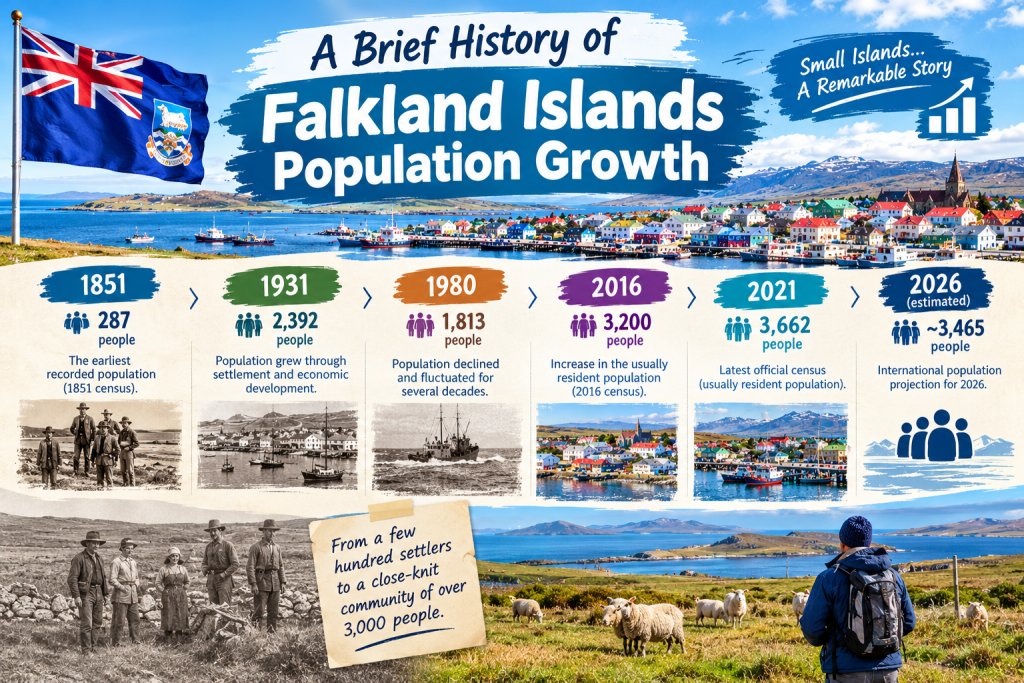
The population of the Falkland Islands has changed considerably over the past two centuries. Settlement, economic conditions, migration, and political events have all influenced the number of people living there.
Historical census records show that the usually resident and present population was estimated at just 287 in 1851. It increased during the late nineteenth and early twentieth centuries, reaching 2,392 in 1931.
The population subsequently declined and fluctuated for several decades. In 1980, the recorded usually resident and present population was 1,813.
During the later twentieth century, economic development and changes in employment helped reshape the islands’ population. The fishing industry became particularly important, while public services, agriculture, and tourism continued to support local livelihoods.
The 2016 census recorded 3,200 usually resident and present people, while the 2021 census recorded 3,142 people in that category. However, the broader 2021 usually resident population figure was 3,662 because it also included an estimated 520 usual residents who were absent on census night.
This distinction is important when comparing population statistics. Figures can appear different because they count different groups of people, rather than because the population suddenly changed.
5. Who Lives in the Falkland Islands?
The Falkland Islands have a diverse community shaped by generations of settlement and more recent migration.
Many Falkland Islanders have family connections stretching back several generations. The islands’ culture reflects a strong connection to local history, rural life, community activities, and the surrounding natural environment.
The 2021 census recorded residents with connections to 68 different countries. Among people born outside the islands, the United Kingdom was the most common country of birth, followed by Saint Helena, the Philippines, and Chile.
This diversity contributes to the islands’ social and cultural life. Residents bring different experiences, skills, and traditions to the community, supporting industries such as healthcare, education, construction, hospitality, and public administration.
English is the main language used in everyday life, education, and government. The islands’ traditions also reflect British influences, alongside the experiences of families and individuals who have settled from other parts of the world.
Despite the small population, residents participate in a wide range of community activities, including sports clubs, youth organizations, conservation groups, and local events.
6. What Is Daily Life Like for the Population?
Life in the Falkland Islands combines modern public services with the practical realities of living in a remote location.
Stanley offers access to schools, healthcare, shops, recreational facilities, and government services. Residents can participate in indoor and outdoor sports, visit local attractions, and enjoy activities around Stanley Harbour.
The Falkland Islands Government provides education and healthcare services, alongside other essential public services. Primary and secondary education is available locally, while many young people travel abroad for further or higher education.
Rural residents experience a different daily routine. Farming, livestock care, maintenance, and transport can play major roles in everyday life. Because properties and settlements may be far apart, planning ahead is particularly important.
The community’s small size encourages local involvement and cooperation. Residents often know one another through work, schools, sports, and community organizations.
However, remote living also brings challenges. Some goods must be imported, international travel requires planning, and certain specialist services may be less readily available than in a large city.
7. How Does the Population Affect Tourism?
The small Falkland Islands population is part of what makes the destination attractive to many visitors. Rather than exploring crowded urban areas, travelers can experience quiet settlements, expansive landscapes, and wildlife habitats.
Tourism is closely connected to the islands’ natural environment. Visitors come to see penguins, albatrosses, sea lions, and other wildlife, as well as to explore Stanley’s history and culture.
The relatively small population also means that tourism services operate within a distinctive local setting. Accommodation, transport, and guided excursions may have limited capacity, especially during busy travel periods.
If you are planning a trip, it is sensible to arrange accommodation and important excursions well in advance. Travel between settlements can require careful coordination, and weather conditions may affect plans.
Visitors should also respect wildlife by keeping appropriate distances, following local guidance, and avoiding disturbance to nesting birds and other animals.
Tourism creates employment and supports local businesses, while responsible travel helps protect the environment that makes the islands special.
8. Falkland Islands Population Compared with Other Destinations
The Falkland Islands have a much smaller population than most countries and major tourist destinations.
A city can contain hundreds of thousands or millions of residents, while the entire Falkland Islands community numbers only a few thousand people. Even many small towns elsewhere have more residents than the islands as a whole.
Population density is also low because residents are spread across a large geographical area. However, the islands’ total area and population-density figures depend on the geographical boundaries and statistical sources being used.
For travelers, this low population density helps explain the islands’ wide-open landscapes and remote character. It also highlights why transport, infrastructure, and public services must be organized differently from those in densely populated places.
The comparison should not suggest that a small population means a lack of culture or community. The Falkland Islands have established institutions, local traditions, sporting activities, and a distinct identity shaped by their history and environment.
9. What Could Influence the Falkland Islands Population in the Future?
The future population will depend on several factors, including employment, migration, education, housing, and the availability of essential services.
Economic activity in fishing, agriculture, tourism, and other industries can influence the demand for workers. If new opportunities develop, the islands may attract additional residents with specialist skills.
Education also plays an important role. Young people who study abroad may later return to work and raise families in the islands, while others may choose to build their careers elsewhere.
Access to healthcare, suitable housing, transport, and reliable infrastructure can affect whether people choose to settle permanently. The needs of an ageing population and the ability to recruit workers for essential services may also shape future planning.
Because the population is small, even relatively modest changes in the number of people moving in or out can have a noticeable effect on annual estimates.
For the most reliable picture of demographic change, readers should consult official census reports and updated publications from the Falkland Islands Government rather than relying solely on online population counters.
Frequently Asked Questions About Falkland Islands Population
1. What is the population of the Falkland Islands in 2026?
International population projections estimate the 2026 population at approximately 3,465 people. The latest official census figure published by the Falkland Islands Government is 3,662 usually resident people in 2021.
2. What is the largest town in the Falkland Islands?
Stanley is the capital and largest settlement. It is home to more than three-quarters of the population and serves as the main center for government, education, healthcare, and commerce.
3. Are the Falkland Islands densely populated?
No. The islands have a small population spread across a large geographical area. Most residents live in Stanley, while others live in rural Camp and smaller island settlements.
4. What nationalities live in the Falkland Islands?
The community includes people with roots in the United Kingdom, Saint Helena, Chile, the Philippines, and many other countries. The 2021 census recorded connections to 68 different countries.
5. Is the Falkland Islands population growing?
The population has changed over time in response to economic development, migration, and other demographic factors. The 2021 census recorded an increase in the usually resident population compared with 2016, while more recent international projections suggest a slightly different trend. Census counts and projections should therefore be compared carefully.
Conclusion
The Falkland Islands population in 2026 is estimated at approximately 3,465 people in international demographic projections, while the latest official census recorded 3,662 usually resident people in 2021.
Despite its small population, the Falkland Islands have a distinctive community, a rich history, and an economy supported by fishing, agriculture, public services, and tourism. Most residents live in Stanley, while others live in rural Camp and the Outer Islands.
For travelers, understanding the population provides useful insight into local life, the islands’ remote character, and the importance of planning ahead. Whether you are interested in wildlife, history, or everyday life in Stanley, the Falkland Islands offer a memorable experience shaped by their people and extraordinary natural environment.
If you are planning a visit, explore our other Falkland Islands travel guides for information about the best time to visit, local attractions, wildlife, and practical travel tips.