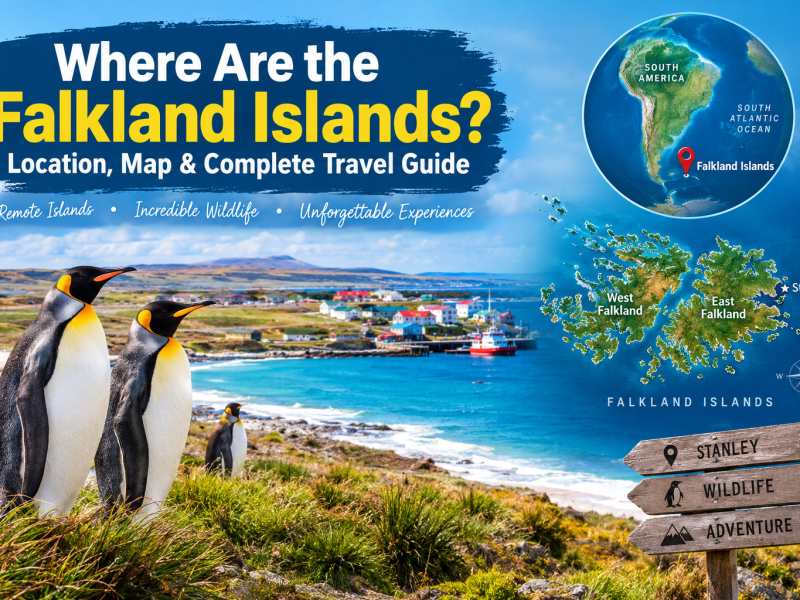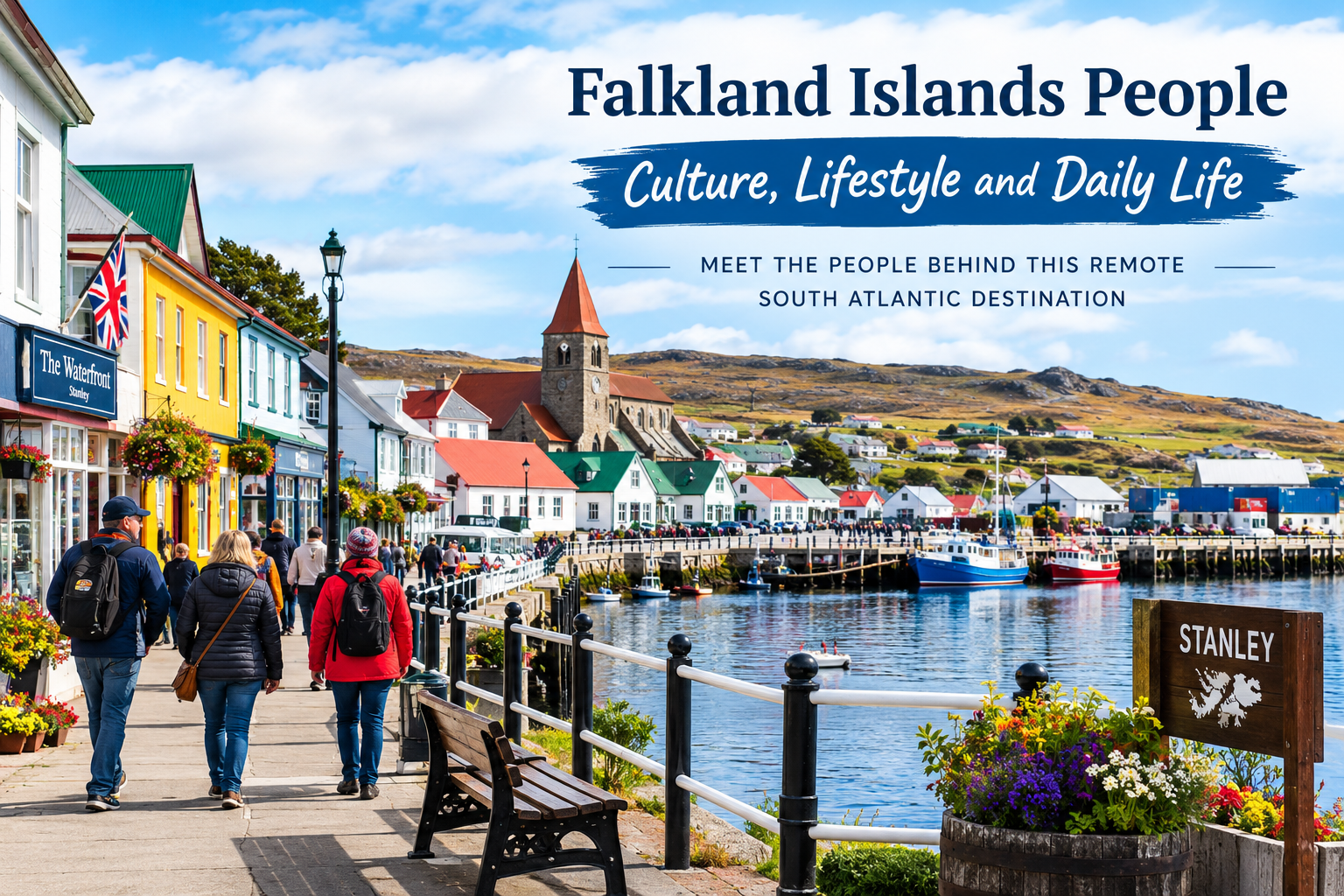
The Falkland Islands are a remote group of islands in the South Atlantic Ocean, known for their spectacular landscapes, diverse wildlife, and peaceful communities. However, one of the most interesting aspects of this destination is its people. The Falkland Islands people have developed a distinctive culture shaped by island life, British traditions, a close-knit community, and a strong connection to the natural environment.
Although the islands are geographically isolated, their residents enjoy modern services, educational opportunities, and a lifestyle that combines traditional values with contemporary living. From the colorful streets of Stanley to the sheep farms scattered across the countryside, everyday life in the Falklands offers a fascinating look at how people build communities in a remote environment.
In this guide, we explore the culture, lifestyle, language, traditions, occupations, and daily experiences of people living in the Falkland Islands.
1. Who Are the People of the Falkland Islands?
The people who live in the Falkland Islands are commonly known as Falkland Islanders or Falklanders. Many residents have British ancestry, and British cultural traditions have a strong influence on local life. However, the islands also have residents from other backgrounds who contribute to the community.
The population is small, numbering approximately 3,500 people in recent years, although the precise figure varies by census and population estimate. Most civilian residents live in Stanley, the capital and largest settlement, while others live in smaller rural communities and on remote farms.
Because the population is relatively small, many residents know one another, and community relationships are an important part of everyday life. People often meet through work, schools, sporting activities, community events, and local gatherings.
The islands have a distinctive identity that reflects their history, geography, and way of life. For visitors, meeting local residents can be an excellent opportunity to learn about the Falklands beyond their famous wildlife and scenery.
2. Culture and Traditions of Falkland Islanders
Falkland Islands culture is strongly influenced by British heritage, but island geography and the demands of living in a remote location have helped create a distinctive local character.
British customs can be seen in many aspects of everyday life, including language, public institutions, celebrations, food, and social traditions. At the same time, the islands’ farming history, maritime connections, and small communities have shaped local customs.
Community events, sporting activities, and social gatherings provide opportunities for residents to spend time together. Traditional celebrations and national occasions are also important parts of community life.
One particularly significant date is Liberation Day on June 14, which commemorates the end of the 1982 conflict and the restoration of local civilian administration under British sovereignty. The day is marked by remembrance and community events.
The Falklands also have a strong tradition of outdoor activities. Walking, fishing, photography, wildlife observation, and other countryside pursuits are popular ways to enjoy the natural environment.
Rather than being defined by one single custom, Falkland Islands culture reflects a combination of shared heritage, local history, and the practical realities of living on remote islands.
3. What Language Do People Speak in the Falkland Islands?
English is the main language spoken in the Falkland Islands. It is used in schools, government, businesses, public services, and everyday conversations.
The local English accent and vocabulary have been influenced by British connections and the islands’ own history. Some residents use expressions and place names that reflect the distinctive character of the local community.
English makes communication relatively straightforward for visitors who speak the language. Travelers can generally use English when asking for directions, arranging tours, visiting shops, or speaking with accommodation providers.
The population also includes people who have moved to the islands from other countries, bringing additional languages and cultural influences. Spanish and other languages may be heard among some residents and workers.
The importance of English reflects the islands’ historical and institutional connections with Britain, while the local way of speaking contributes to their distinctive identity.
4. Daily Life in the Falkland Islands
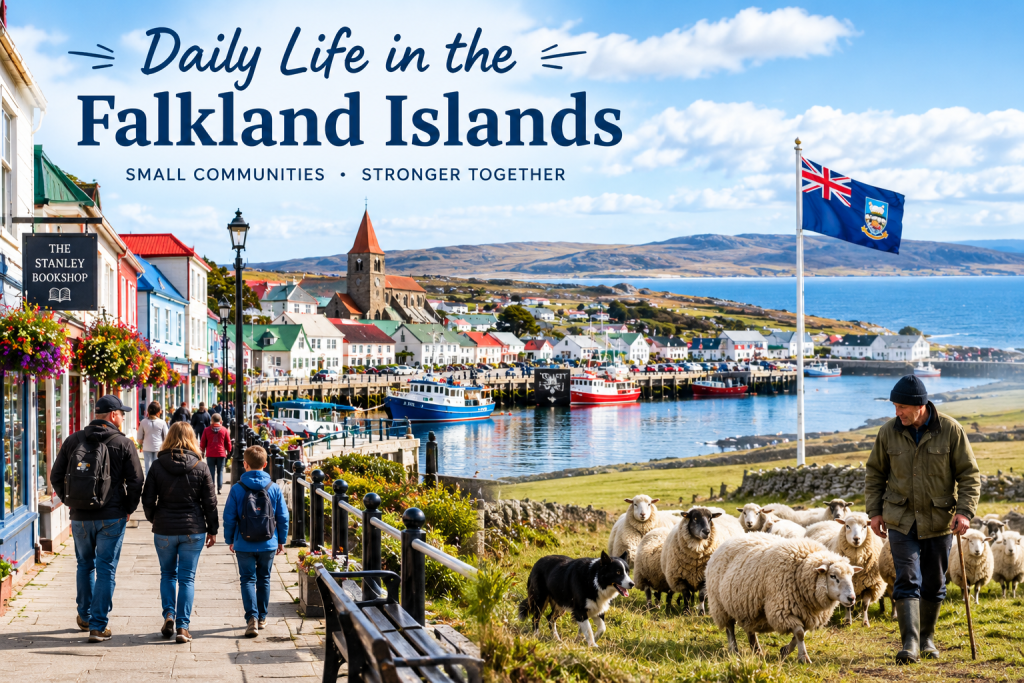
Daily life in the Falkland Islands is shaped by the small population, changing weather, remote location, and strong relationship with the outdoors.
In Stanley, residents follow routines similar to those in many small towns. People go to work, attend school, shop for groceries, visit friends, and participate in community activities. The town has shops, restaurants, public facilities, and services that support everyday needs.
Outside Stanley, life can be very different. Rural residents may live on farms or in small settlements surrounded by open grassland, rocky hills, beaches, and wildlife habitats. Travel between locations can require careful planning because distances are significant and roads may be unpaved.
Weather also plays an important role. Wind, rain, and rapidly changing conditions can affect travel, outdoor work, and recreational activities. Residents often plan their day with the weather in mind.
Despite these challenges, many people appreciate the quiet atmosphere, open spaces, and close community relationships. The islands offer a lifestyle that can feel less crowded than life in a major city.
However, living in a remote location also means that some goods, services, and specialist facilities are less readily available than in larger countries. Residents must sometimes plan ahead for shopping, travel, and appointments.
5. Where Do Most People Live?
Stanley is the main population center of the Falkland Islands. Located on East Falkland, it serves as the islands’ administrative, commercial, and social hub.
The town features colorful buildings, a waterfront, local businesses, schools, public services, and historic landmarks. Visitors can explore attractions such as Christ Church Cathedral, the Whalebone Arch, and the Falkland Islands Museum while getting a sense of local life.
Stanley is also an important starting point for travelers visiting nearby wildlife sites and other parts of the islands.
Beyond the capital, the islands are home to smaller rural settlements and farms. These locations are often referred to collectively as Camp, a local term derived from the Spanish word campo, meaning countryside.
Life in Camp is closely connected to the land, farming, and outdoor work. Some residents live far from Stanley, making transportation and communication especially important.
The contrast between Stanley and Camp is one of the most distinctive features of Falkland Islands life. The capital provides many everyday services, while the countryside offers a more remote lifestyle surrounded by expansive natural landscapes.
6. Jobs and Occupations of Falkland Islands People
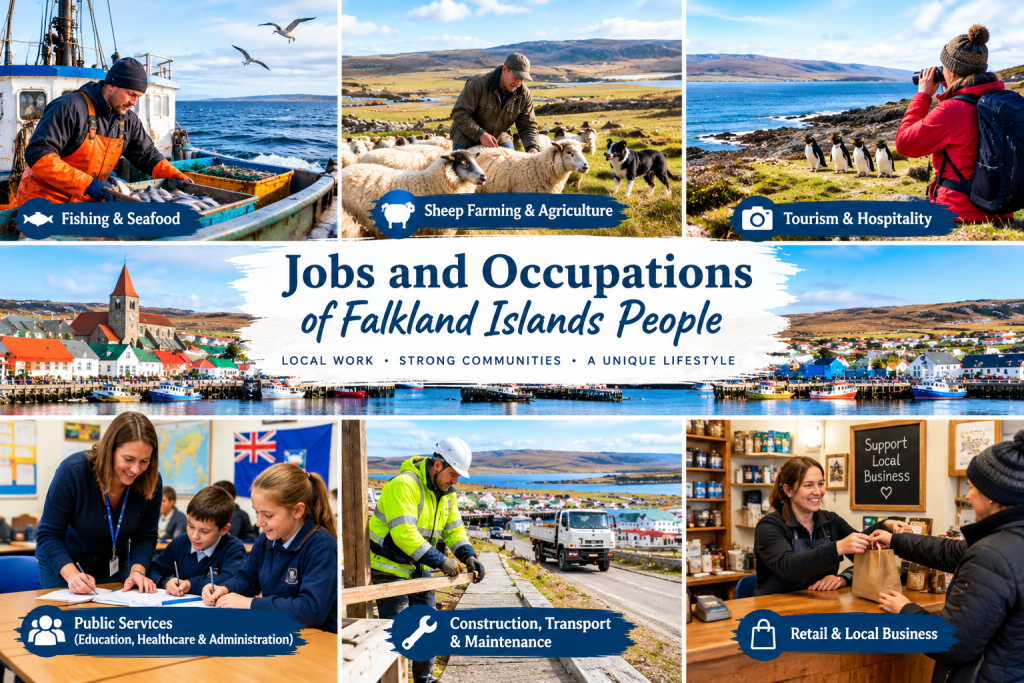
Employment in the Falkland Islands reflects the needs of a small, remote economy. Several industries provide important sources of work for local residents.
Fishing and seafood: Commercial fishing is a major part of the islands’ economy. Fisheries management and seafood exports support employment and public revenue.
Sheep farming and agriculture: Sheep farming has historically played an important role in the Falklands. Rural farms raise sheep for wool and other agricultural products, and farming continues to shape life in Camp.
Government and public services: Education, healthcare, administration, infrastructure, and other public services provide employment for many residents.
Tourism and hospitality: Tourism creates opportunities in accommodation, restaurants, transportation, guiding, and wildlife excursions. Visitors come to see penguins, albatrosses, seals, and dramatic coastal scenery.
Construction, transport, and retail: These sectors help maintain homes, roads, businesses, and essential services across the islands.
The availability of particular jobs can vary, and some employers recruit workers from overseas when local skills or labor are limited. As a result, the population includes people who have moved to the islands for employment.
7. Family Life, Education, and Community Relationships
Family and community connections are important parts of life in the Falkland Islands. Because the population is relatively small, people often encounter one another through schools, workplaces, sports clubs, and local events.
Children in Stanley have access to local educational facilities, including primary and secondary education. Rural families may face different practical considerations because of the distances between farms and the capital.
The islands provide healthcare services through local facilities, although some complex medical needs may require treatment overseas. This is one example of how the remote location influences planning for families and individuals.
Sports, clubs, and recreational activities provide opportunities for residents to socialize. Football, rugby, running, fishing, and other outdoor pursuits contribute to community life.
Local organizations and public events also help bring people together. In a small community, cooperation can be especially valuable when weather conditions, transport problems, or other challenges affect daily routines.
These close relationships contribute to the distinctive social atmosphere that many visitors notice when spending time in Stanley or visiting rural settlements.
8. Food and Eating Habits in the Falkland Islands
Food in the Falkland Islands reflects British influences, local agricultural traditions, and the practical challenges of importing goods to a remote destination.
Common meals may include meat, vegetables, soups, pies, baked dishes, and other familiar British-style foods. Lamb has a natural place in local food traditions because sheep farming has long been important to the islands.
Seafood is also part of the islands’ wider food economy, although the availability of particular products depends on local supply and commercial distribution.
Many imported groceries arrive by ship or air, so the selection and price of products can differ from those in larger urban markets. Residents may plan shopping trips carefully, particularly when supplies are limited or weather disrupts transportation.
Visitors staying in Stanley can find places to eat and purchase basic supplies. Travelers heading to remote locations should check what meals and provisions are included in their accommodation or tour arrangements.
Trying local food is one way to learn about everyday life in the Falklands, especially when meals reflect the islands’ farming heritage and the realities of their location.
9. Weather, Nature, and Outdoor Lifestyle
The natural environment has a major influence on the lifestyle of Falkland Islanders. The islands are famous for their open landscapes, rugged coastlines, grass-covered hills, and remarkable wildlife.
The climate is generally cool and windy, with weather that can change quickly. Residents who work outdoors or travel between settlements must be prepared for changing conditions.
Outdoor activities are part of everyday life for many people. Walking, fishing, photography, birdwatching, and countryside exploration offer ways to enjoy the environment.
Wildlife is especially important to the islands’ identity and tourism industry. The Falklands support several penguin species, including gentoo, king, rockhopper, and Magellanic penguins, as well as black-browed albatrosses, sea lions, and elephant seals.
However, living alongside wildlife also requires respect for natural habitats. Residents and responsible tour operators encourage visitors to follow local guidance, maintain appropriate distances from animals, and avoid disturbing nesting birds or other wildlife.
For travelers, the connection between local life and the environment is one of the most memorable aspects of the Falkland Islands.
10. What Makes Falkland Islands People Unique?
The people of the Falkland Islands are not defined by a single personality or lifestyle. Like any community, residents have different interests, backgrounds, occupations, and experiences.
Nevertheless, several features help distinguish life in the islands.
First, the small population encourages strong community connections. Residents may rely on local networks for social activities, practical assistance, and community events.
Second, the remote location requires planning and adaptability. Weather, transport schedules, imported supplies, and long distances can influence everyday decisions.
Third, the islands have a strong connection to their land and history. Farming, fishing, wildlife, and the events that shaped the community all contribute to local identity.
Finally, the combination of British cultural influences and the realities of South Atlantic island life creates a distinctive way of living.
Visitors should remember that the Falkland Islands are a living community, not simply a wildlife destination. Being respectful of residents, private property, local customs, and working environments helps make travel more rewarding.
11. Tips for Visitors Who Want to Meet Local People
If you want to learn more about Falkland Islands people during your trip, a few simple steps can help you understand the community respectfully.
- Spend time in Stanley: Walk around the town, visit local shops, and explore historic sites.
- Visit the museum: Learn about the islands’ history, culture, economy, and community development.
- Support local businesses: Choose local guides, restaurants, shops, and accommodation providers where practical.
- Ask questions politely: Many residents can offer useful insights, but respect their privacy and personal boundaries.
- Explore beyond the capital: If your itinerary allows, arrange a suitable guided visit to a rural settlement or wildlife destination.
- Respect private property: Farms and other rural areas may be working environments, so obtain permission or use an authorized tour.
- Prepare for the weather: Carry windproof and waterproof clothing when exploring outdoors.
Planning ahead is particularly important because transport options and accommodation outside Stanley can be limited. Booking tours and rural stays in advance can help you make the most of your visit.
Conclusion
The Falkland Islands people are an essential part of what makes this remote South Atlantic destination special. Their culture combines British influences, local traditions, a strong community spirit, and a close relationship with the surrounding landscape.
From the busy waterfront and everyday routines of Stanley to the quiet farms of Camp, life in the islands reflects both modern living and the challenges of geographical isolation. Fishing, farming, public services, and tourism all contribute to the local economy, while family connections, sports, and outdoor activities help shape community life.
For travelers, learning about Falkland Islanders provides a deeper understanding of the destination beyond its penguin colonies and dramatic scenery. By visiting local businesses, exploring historical sites, and respecting residents’ customs and privacy, visitors can gain a more meaningful appreciation of island life.
Whether you are planning a holiday, researching the region’s culture, or simply curious about this remote destination, discovering the people of the Falkland Islands is an excellent way to understand its unique character.