If you have ever wondered where the Falkland Islands are, you are not alone. These remote islands in the South Atlantic Ocean are known for their spectacular coastlines, remarkable wildlife, penguin colonies, and fascinating history. Although they are relatively isolated from major population centers, the Falkland Islands attract travelers who want to experience unspoiled landscapes and unique wildlife encounters.
The Falkland Islands are located east of southern South America, approximately 300 miles (480 kilometers) from the mainland. They have a small population, a distinctive island culture, and a capital city called Stanley. Visitors can explore historic landmarks, watch penguins in their natural habitat, discover rugged beaches, and experience the peaceful atmosphere of the South Atlantic.
In this complete guide, you will learn where the Falkland Islands are located, how to find them on a map, their relationship with South America, what makes them famous, and how to plan a visit.
1. Where Are the Falkland Islands Located?
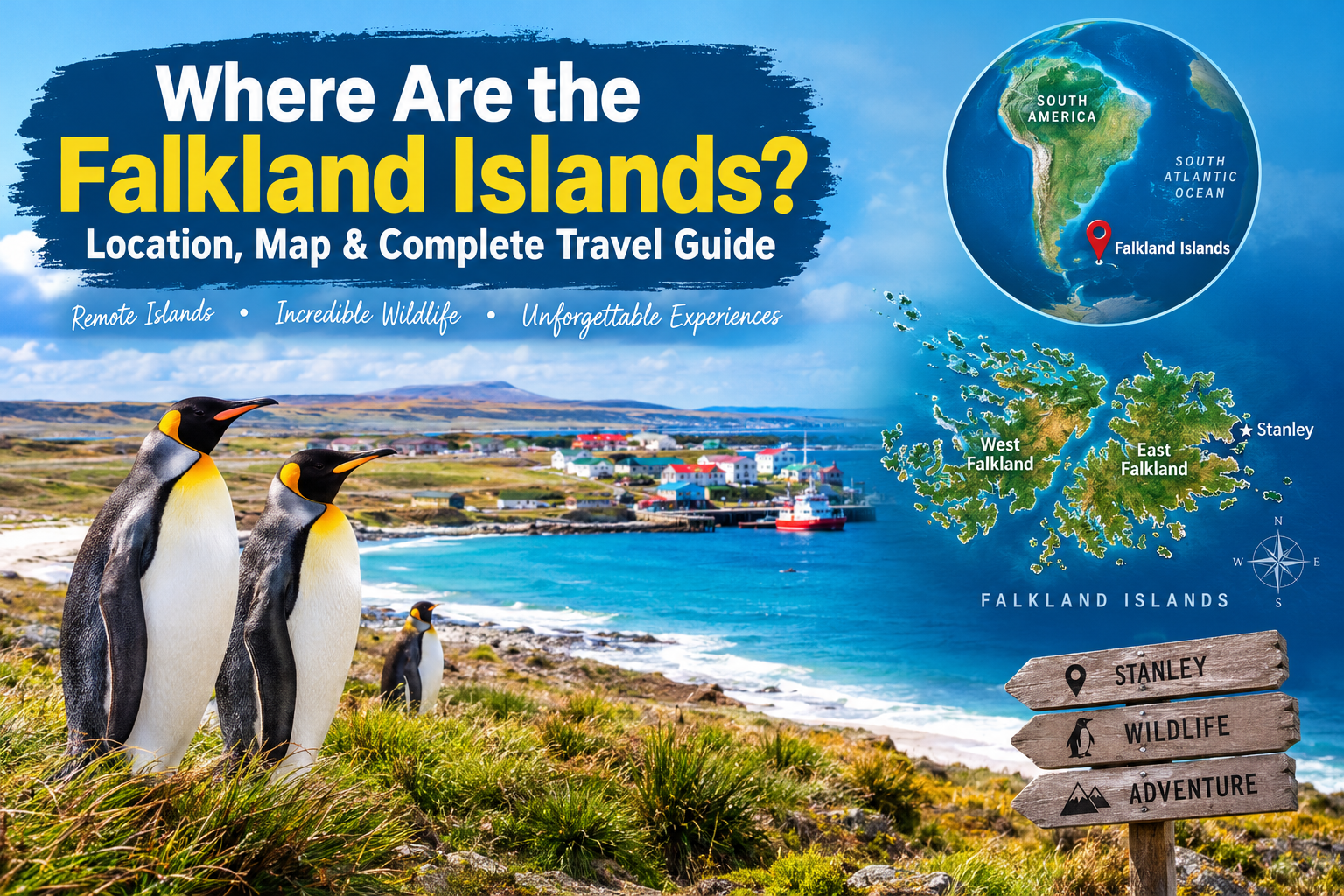
The Falkland Islands are an archipelago in the South Atlantic Ocean, approximately 480 kilometers (300 miles) east of the southern coast of South America. They lie east of Argentina and north of the Antarctic region, making them one of the more remote inhabited island groups in the southern Atlantic.
The archipelago consists of two principal islands, East Falkland and West Falkland, along with hundreds of smaller islands and islets. Together, they feature rolling hills, open grasslands, rocky coastlines, sheltered bays, and sandy beaches.
The islands are geographically part of the South Atlantic region rather than continental South America. Their position gives them a cool, windy maritime climate and a landscape that supports a wide variety of seabirds and marine wildlife.
The Falkland Islands are particularly appealing to nature lovers because many areas remain sparsely populated. Outside Stanley and a few small settlements, the countryside offers wide-open views and opportunities to observe wildlife in relatively natural surroundings.
2. Where Are the Falkland Islands on a World Map?
When looking at a world map, find the southern portion of South America first. Locate Argentina, especially its southern mainland, and then look east across the South Atlantic Ocean.
You will find the Falkland Islands offshore, separated from the South American mainland by several hundred kilometers of ocean.
Their approximate geographical coordinates are 51° south latitude and 59° west longitude. These coordinates place the archipelago in the cool southern reaches of the Atlantic Ocean.
The islands are much closer to South America than to most other major continents. Their remote location has influenced their transportation links, economy, settlement patterns, and wildlife.
For travelers, understanding this location is important when planning flights, arranging accommodation, or organizing excursions. The islands are not a typical stop on many international travel routes, so visitors should plan transportation carefully.
3. How Far Are the Falkland Islands From South America?
The Falkland Islands are approximately 480 kilometers (300 miles) from the South American mainland, although the precise distance depends on the points being measured.
Their closest mainland connections are with southern Argentina. Despite this geographical proximity, reaching the islands requires advance planning because international transportation options are limited compared with more popular destinations.
Travelers should distinguish between geographical distance and actual travel time. A destination may look relatively close on a map, but flight schedules, departure locations, connections, and weather conditions can affect the journey.
For visitors planning a trip, it is advisable to check current airline schedules and official travel information well before departure.
The surrounding ocean also plays an important role in the islands’ identity. Marine environments support penguins, seals, sea lions, dolphins, and numerous seabirds, making the Falklands an attractive destination for wildlife enthusiasts and photographers.
4. What Country Do the Falkland Islands Belong To?
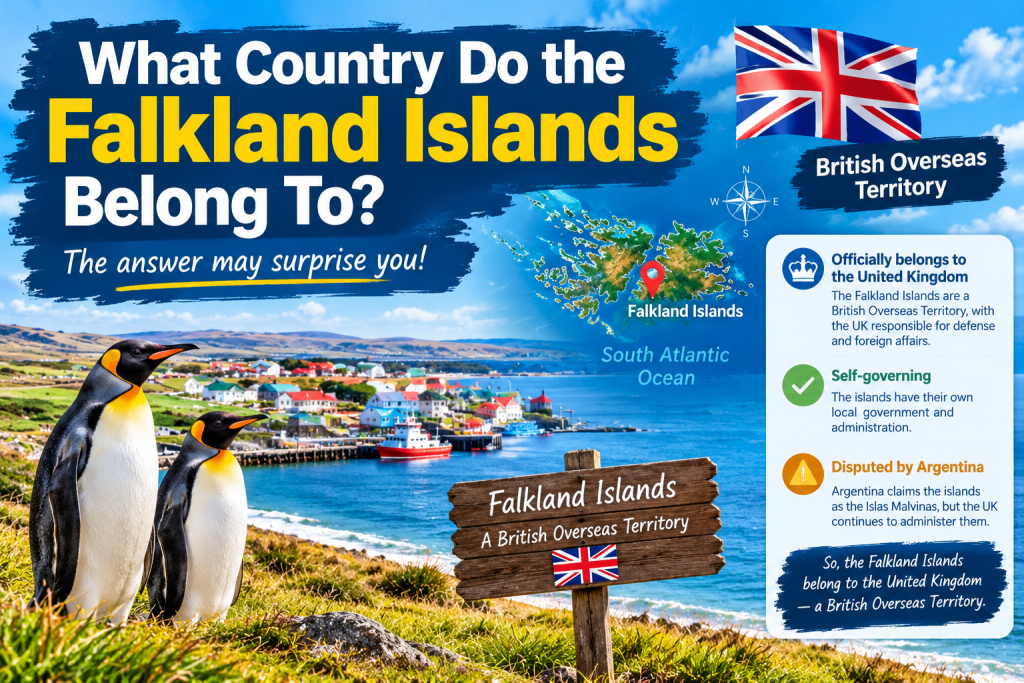
The Falkland Islands are a British Overseas Territory. They have their own local government, while the United Kingdom is responsible for matters including defense and foreign affairs.
Their sovereignty is disputed by Argentina, which calls them the Islas Malvinas and claims them as part of its territory. The United Kingdom also claims sovereignty and administers the islands. The disagreement has a long history and remains politically significant.
In 1982, Argentina and the United Kingdom fought a war over the islands. The conflict lasted approximately ten weeks and remains an important part of local history. Visitors can learn about this period through museums, memorials, and historic sites.
Understanding this background provides useful context for travelers interested in the islands’ culture and heritage. When writing about the Falkland Islands, it is best to describe their current administration and the sovereignty dispute accurately and neutrally.
For practical travel purposes, visitors should consult the relevant official government guidance for passport, entry, and transportation requirements before booking their journey.
5. What Is the Capital of the Falkland Islands?
Stanley is the capital and largest settlement of the Falkland Islands. Located on East Falkland, it is the main center for administration, commerce, services, and tourism.
Stanley is known for its colorful buildings, waterfront setting, historic landmarks, and relaxed atmosphere. Although small compared with major international cities, it offers several interesting places to explore.
One of its most recognizable landmarks is Christ Church Cathedral, famous for the large whalebone arch outside. The arch is a popular photography spot and an important feature of the town’s identity.
Visitors can also explore the Falkland Islands Museum, which presents exhibits about the islands’ history, maritime connections, wildlife, and local life. The waterfront and surrounding streets provide opportunities to appreciate the town’s architecture and scenic harbor.
Stanley is also a useful starting point for organized wildlife excursions and journeys into the surrounding countryside. Travelers can arrange visits to penguin colonies, beaches, and remote settlements through local operators.
If you are visiting the Falkland Islands for the first time, spending time in Stanley is an excellent way to learn about local culture before exploring the wider archipelago.
6. What Are the Main Islands of the Falkland Islands?
The Falkland Islands contain two principal islands: East Falkland and West Falkland. Hundreds of smaller islands and islets surround them.
East Falkland
East Falkland is the larger of the two main islands and is home to Stanley. It includes rolling countryside, hills, coastal areas, and several settlements.
Visitors can explore the capital, visit historic landmarks, and arrange excursions to wildlife locations. The island’s varied landscapes make it suitable for photography, hiking, birdwatching, and scenic drives.
East Falkland is often the main starting point for visitors because it contains the capital and many essential travel services.
West Falkland
West Falkland lies across Falkland Sound from East Falkland. It is known for its rugged scenery, open grasslands, coastal landscapes, and small rural settlements.
Travelers looking for a quieter experience may enjoy exploring West Falkland with a local guide or organized tour. Wildlife viewing, birdwatching, and photography are popular activities in suitable locations.
Smaller Islands
The smaller islands are an important part of the archipelago’s natural environment. Many support breeding seabirds and penguin colonies, while some offer opportunities to see seals and other marine wildlife.
Access varies from island to island, so visitors should arrange trips with experienced local operators and follow wildlife-protection guidelines.
7. Why Are the Falkland Islands Famous?
The Falkland Islands are famous for their wildlife, dramatic landscapes, historical significance, and remote location.
Penguin Colonies
Penguins are among the islands’ biggest attractions. Several species can be found in the Falklands, including gentoo, king, rockhopper, and Magellanic penguins.
Volunteer Point, on East Falkland, is particularly well known for its king penguin colony. Visitors may also encounter gentoo and Magellanic penguins at other locations, depending on the season and local conditions.
Wildlife experiences should always be conducted responsibly. Keep a respectful distance from animals, avoid disturbing nesting sites, and follow the instructions of local guides.
Spectacular Beaches and Coastlines
The islands feature beautiful beaches, rocky headlands, sheltered bays, and expansive ocean views. Some beaches are important breeding or resting areas for wildlife, while others offer wonderful opportunities for landscape photography.
The combination of pale sand, blue water, green grasslands, and rugged terrain creates striking scenery throughout the archipelago.
Birdwatching
The Falkland Islands are a rewarding destination for birdwatchers. Albatrosses, penguins, cormorants, geese, and other seabirds inhabit different parts of the islands.
The variety of species and relatively open landscapes make wildlife observation particularly appealing.
History and Heritage
The islands’ maritime history, settlement history, and 1982 conflict have shaped their identity. Museums, monuments, and historic locations offer visitors opportunities to understand these events and their continuing significance.
8. What Is the Climate Like in the Falkland Islands?
The Falkland Islands have a cool, windy oceanic climate. Temperatures are generally moderate rather than extreme, but strong winds and changing weather can make outdoor conditions feel colder than expected.
Summers in the Southern Hemisphere run approximately from December through February. These months generally offer milder weather and long daylight hours, making them popular for sightseeing and wildlife trips.
Winter runs approximately from June through August. Conditions are colder, daylight hours are shorter, and some travel and outdoor activities may be more challenging.
Spring and autumn can also be rewarding times to visit, depending on the wildlife species and experiences you want to see.
The weather can change quickly, so pack layers, waterproof outerwear, sturdy walking shoes, and wind-resistant clothing regardless of the season. Before setting out on excursions, check local forecasts and follow guidance from tour operators.
9. How Can You Travel to the Falkland Islands?
Because the Falkland Islands are remote, reaching them requires careful planning. Air travel is an important option, and some visitors arrive by cruise ship.
By Air
Flights operate on limited routes and schedules, which can change. Travelers should confirm current services, departure points, baggage rules, and entry requirements directly with the relevant airline or official travel source.
Do not assume that flights operate daily or that connections will be available on every date. Booking well in advance is sensible, especially during popular wildlife-viewing periods.
By Cruise Ship
Some expedition cruises and other cruise itineraries include the Falkland Islands as a port of call. These trips can offer an opportunity to see wildlife and explore selected locations without arranging a separate independent journey.
Shore excursions may depend on weather, sea conditions, and landing arrangements. A scheduled stop does not always guarantee that a particular landing will take place.
Getting Around the Islands
Transportation options outside Stanley are limited compared with those in large cities. Many wildlife sites and remote locations are best visited through organized excursions, local guides, or prearranged transport.
Accommodation and transport should be planned together, particularly if you intend to visit areas beyond the capital.
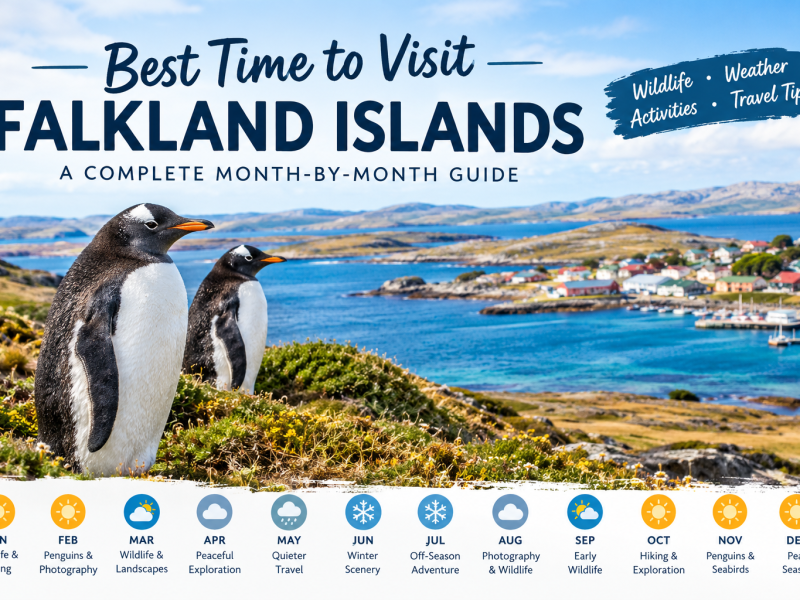
10. What Is the Best Time to Visit the Falkland Islands?
The best time to visit depends on your interests, especially the wildlife you want to see.
November to February is a popular period for wildlife viewing and outdoor exploration. During the Southern Hemisphere summer, many penguins and seabirds are active around their breeding colonies, although timing varies by species and location.
December and January generally provide long daylight hours and opportunities for photography, walking, and scenic excursions.
Spring and early summer can be rewarding for observing breeding activity, while later summer may offer opportunities to see growing chicks and other seasonal wildlife behavior.
Winter visitors may experience a quieter atmosphere but should expect colder weather, shorter days, and potentially more limited excursion options.
Before booking, research the wildlife locations you hope to visit and ask local operators about seasonal conditions. Wildlife activity varies naturally, so sightings cannot be guaranteed.
11. Essential Travel Tips for First-Time Visitors
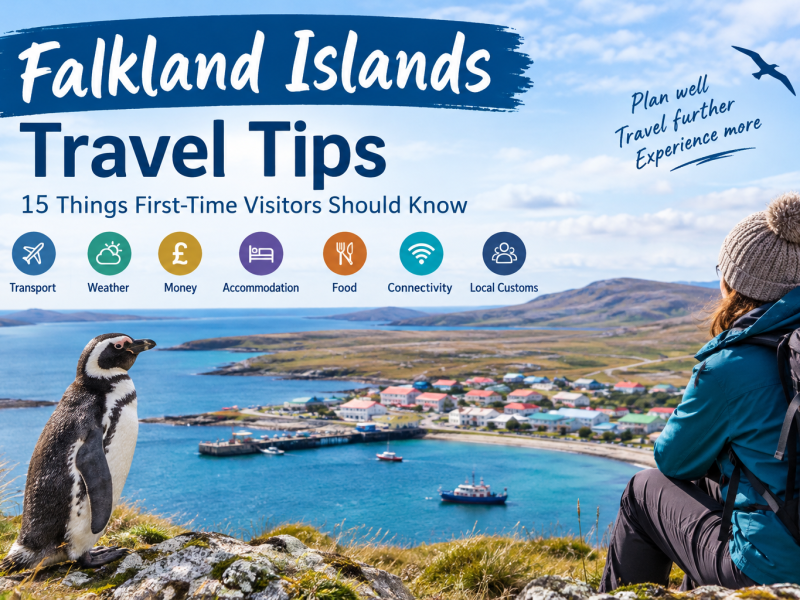
If you are planning your first visit, a little preparation can make the experience much easier.
- Book early: Flights, accommodation, and wildlife excursions can have limited availability.
- Pack for changing weather: Bring layers, waterproof clothing, and windproof outerwear.
- Plan transportation: Arrange transfers and excursions in advance, particularly outside Stanley.
- Respect wildlife: Follow viewing guidelines and never approach or feed wild animals.
- Carry suitable footwear: Many excursions involve uneven ground, wet conditions, or walking across open countryside.
- Check entry requirements: Confirm passport, visa, and travel-document requirements with official sources.
- Allow flexibility: Wind and other weather conditions may affect transport and wildlife excursions.
- Bring photography equipment: A camera with a suitable zoom lens can help you photograph animals without getting too close.
The Falkland Islands reward travelers who are prepared for remote travel and who appreciate nature, history, and peaceful landscapes.
Conclusion
So, where are the Falkland Islands? They are a remote archipelago in the South Atlantic Ocean, approximately 480 kilometers (300 miles) east of southern South America. The islands are administered as a British Overseas Territory, have a capital called Stanley, and are known for their remarkable penguin colonies, diverse seabirds, rugged coastlines, and distinctive history.
Whether you want to photograph king penguins, explore Stanley’s historic landmarks, discover quiet beaches, or experience the wild beauty of the South Atlantic, the Falkland Islands offer a memorable destination for adventurous travelers.
With careful planning, suitable clothing, and respect for local wildlife, you can make the most of a visit to this fascinating part of the world. Start by understanding its location, researching transportation options, and choosing the season that best matches your travel interests.