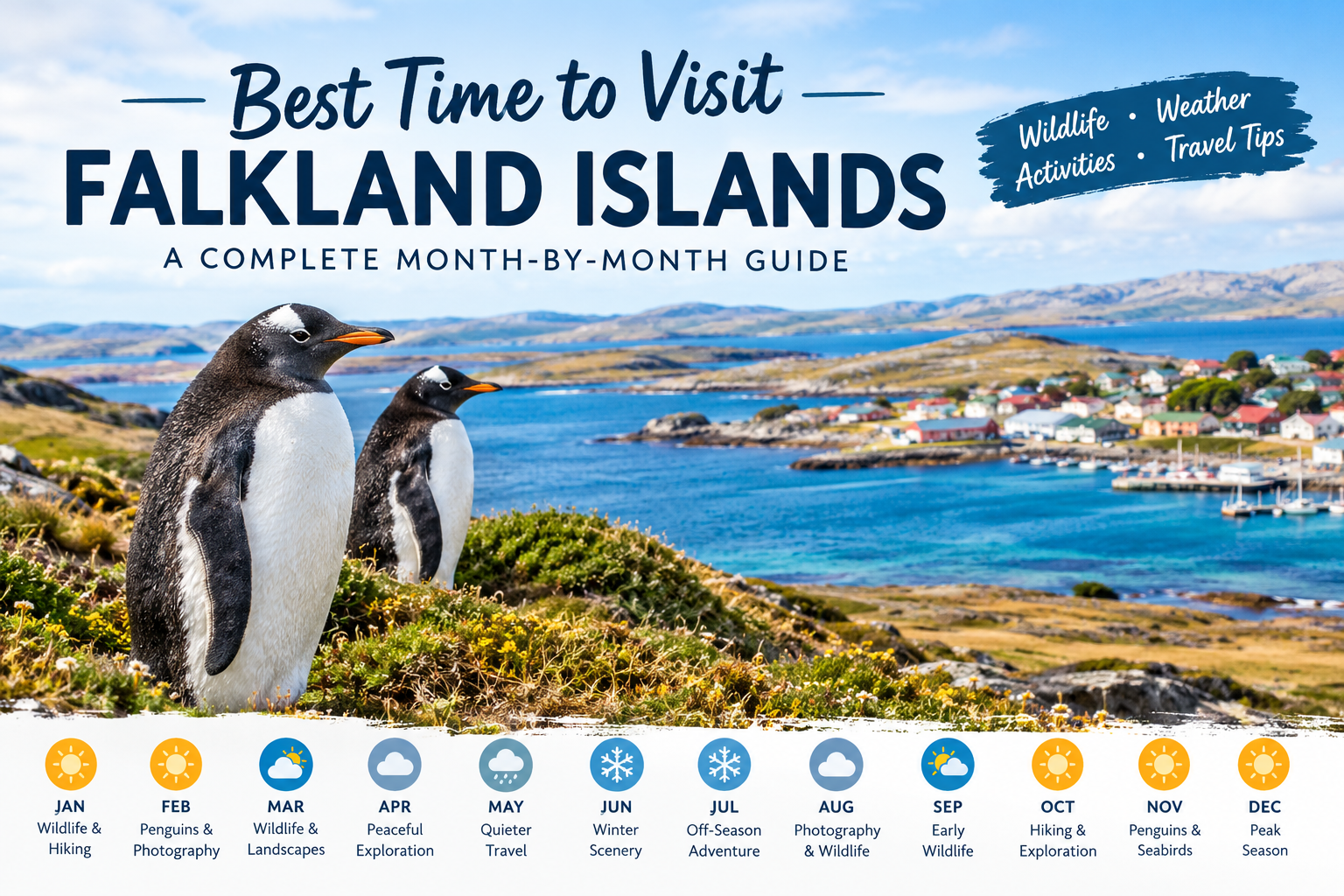
If you’re planning a trip to the Falkland Islands, choosing the right time of year can make a big difference. The islands are famous for spectacular wildlife, dramatic coastal landscapes, remote beaches, and charming Stanley. But the weather, daylight hours, wildlife activity, and travel conditions change significantly throughout the year.
So, what is the best time to visit Falkland Islands?
For most travelers, October through March is the best period to visit. These months offer longer daylight hours, milder conditions, and excellent opportunities to see penguins, seabirds, seals, and other wildlife. However, each month has something different to offer.
This complete month-by-month guide explains what to expect throughout the year so you can choose the ideal time for your Falkland Islands adventure.
What Is the Best Time to Visit Falkland Islands?
The best time to visit Falkland Islands is generally between October and March, when the islands experience their main wildlife and tourist season.
During this period, visitors can enjoy longer days and better opportunities for wildlife watching. Spring and summer are particularly attractive for travelers interested in penguins, seabirds, hiking, photography, and exploring remote coastal areas.
December through February are especially popular because of the combination of longer daylight, active wildlife, and relatively mild temperatures.
However, there isn’t one perfect month for everyone. Wildlife enthusiasts may choose a different month from hikers or photographers, so it’s useful to understand the entire year.
Falkland Islands Weather at a Glance
The Falkland Islands have a cool maritime climate. Weather can change quickly, and wind is an important factor when planning outdoor activities.
| Month | Season | Typical Conditions | Best For |
|---|---|---|---|
| January | Summer | Mild, long daylight | Wildlife & hiking |
| February | Summer | Mild, active wildlife | Penguins & photography |
| March | Autumn | Cooler, changing weather | Wildlife & quieter travel |
| April | Autumn | Cool and windy | Landscapes |
| May | Autumn | Colder, shorter days | Quiet travel |
| June | Winter | Cold, short daylight | Experienced travelers |
| July | Winter | Cold and windy | Winter landscapes |
| August | Winter | Cold, gradually brighter | Photography |
| September | Spring | Cool, improving conditions | Early wildlife season |
| October | Spring | Milder, longer days | Wildlife & hiking |
| November | Spring | Mild, active wildlife | Penguins & seabirds |
| December | Summer | Mild, long daylight | Wildlife & outdoor activities |
January: One of the Best Months for Wildlife
January is one of the most popular times to visit the Falkland Islands.
Summer brings long daylight hours, making it easier to spend more time exploring. Wildlife is also highly active, with penguins, seabirds, seals, and other species providing excellent opportunities for photography and observation.
The relatively mild conditions make January a strong choice for hiking and exploring the islands’ coastal landscapes.
Best for: wildlife watching, penguins, photography, hiking, and outdoor adventures.
February: Excellent for Penguins and Photography
February continues to be an excellent month for wildlife experiences.
Penguin colonies remain active, while the landscape can provide spectacular photographic opportunities. Long daylight hours allow travelers to spend extended periods outdoors.
If your main goal is wildlife photography, February can be particularly rewarding because you can combine wildlife encounters with dramatic Falkland Islands scenery.
Best for: penguin watching, wildlife photography, hiking, and sightseeing.
March: Wildlife and Fewer Crowds
March marks the transition toward autumn.
Temperatures begin to cool and daylight gradually decreases, but wildlife viewing can still be rewarding. Travelers who prefer a quieter atmosphere may appreciate March compared with the busiest summer period.
It’s also a good month for experiencing the islands’ landscapes without focusing exclusively on the peak summer season.
Best for: wildlife, landscapes, photography, and quieter trips.
April: A Peaceful Autumn Experience
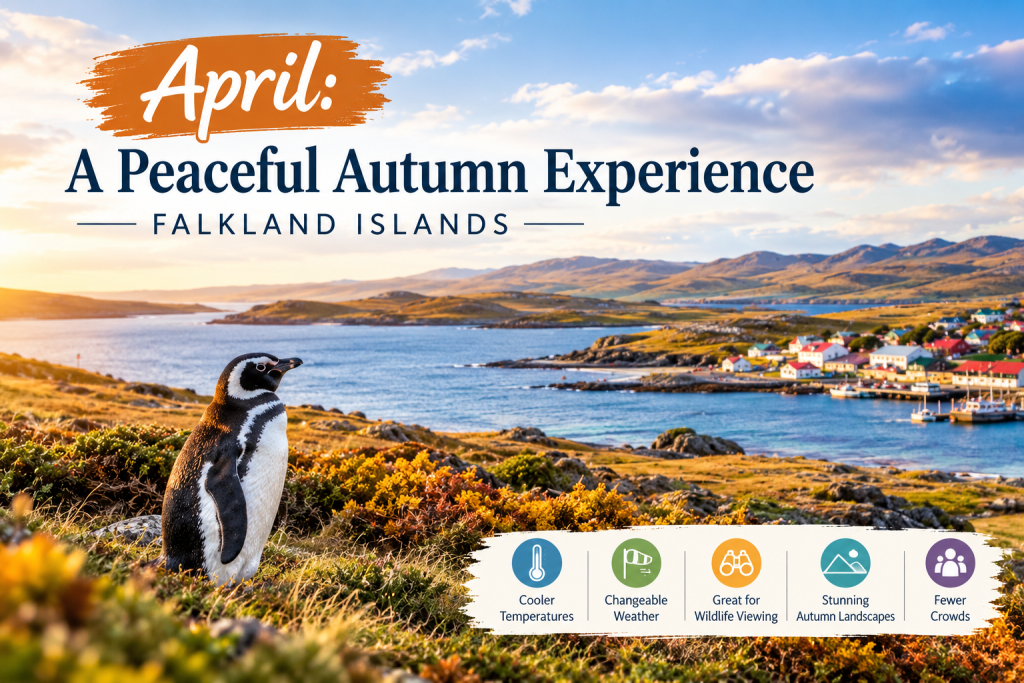
April brings cooler autumn conditions.
The weather can become more unpredictable, with stronger winds and shorter days. However, travelers who enjoy remote landscapes and peaceful surroundings may still find this an interesting time to visit.
Outdoor activities are more weather-dependent, so flexible planning is recommended.
Best for: landscape photography, peaceful exploration, and travelers who prefer quieter conditions.
May: Cooler and Quieter
May is firmly into the cooler part of the year.
Daylight hours are shorter and temperatures drop. The weather can be windy and changeable, so visitors should prepare carefully for outdoor activities.
Although May isn’t the most popular month for a first visit, it can appeal to travelers looking for a quieter experience and dramatic seasonal scenery.
Best for: solitude, photography, and experienced travelers.
June: Winter Begins
June is a winter month in the Falkland Islands.
Days are shorter and conditions are generally colder. Wind can make outdoor temperatures feel considerably colder than the thermometer suggests.
If you travel during June, warm waterproof clothing and flexible plans are particularly important.
Best for: experienced travelers and winter landscapes.
July: The Coldest Part of the Year
July is among the coldest months in the Falkland Islands.
The shorter days limit the amount of time available for outdoor sightseeing, while cold and windy conditions can make travel more challenging.
For most first-time visitors, July isn’t the ideal month. However, adventurous travelers interested in experiencing the islands outside the main tourist season may enjoy its unique atmosphere.
Best for: off-season travel and dramatic winter scenery.
August: Winter Landscapes
August remains cold, but the days gradually begin getting longer as spring approaches.
Weather can still be windy and unpredictable, so travelers should be prepared for changing conditions.
For photographers, the combination of remote landscapes, low-season atmosphere, and changing light can create interesting opportunities.
Best for: photography, quiet travel, and winter scenery.
September: Spring Begins
September marks the beginning of spring.
Daylight increases and conditions gradually become more suitable for outdoor exploration. Wildlife activity also begins to increase as the islands move toward the main spring and summer season.
If you want to visit before the busiest months while still experiencing the beginning of the wildlife season, September can be an interesting option.
Best for: early-season wildlife, photography, and quieter travel.
October: A Great Month to Visit
October is one of the strongest choices for travelers seeking a balance between wildlife and outdoor activities.
Spring is well underway, daylight hours are increasing, and wildlife activity becomes more noticeable. Conditions can still be windy, but the overall experience is increasingly favorable for exploration.
October is particularly attractive for visitors who want to avoid the height of the summer season while still enjoying excellent wildlife opportunities.
Best for: wildlife, hiking, photography, and outdoor exploration.
November: Excellent Wildlife Opportunities

November is another excellent month for visiting the Falkland Islands.
Spring conditions continue to improve, and wildlife activity becomes a major attraction. Penguins and seabirds are particularly important highlights for visitors.
Longer days also make it easier to explore coastal areas and enjoy scenic landscapes.
For many travelers, November provides one of the best combinations of weather, daylight, and wildlife.
Best for: penguins, seabirds, wildlife photography, hiking, and sightseeing.
December: Summer and Peak Travel Season
December brings the beginning of summer and some of the longest daylight hours of the year.
Wildlife experiences are a major reason travelers visit during this period. The longer days provide plenty of opportunities for photography, hiking, sightseeing, and exploring the islands.
Because December is part of the popular travel season, it’s wise to plan accommodation, transport, and excursions ahead of time.
Best for: wildlife, penguins, hiking, photography, and first-time visitors.
Best Time to Visit Falkland Islands for Wildlife
If wildlife is your main reason for visiting, October through March is generally the most attractive period.
During these months, visitors can experience significant wildlife activity, including penguins, seabirds, seals, and other species.
The exact wildlife experience varies by location and time of year, so travelers interested in specific animals should plan their itinerary around the species they most want to see.
Best Time to Visit Falkland Islands for Penguins
Penguins are one of the biggest attractions in the Falkland Islands.
The main visitor season from spring through summer offers excellent opportunities to observe penguin colonies. November through February can be especially appealing for travelers who want to combine penguin viewing with longer days and milder summer conditions.
Popular wildlife locations can require travel outside Stanley, so allow enough time in your itinerary for excursions and changing weather.
Best Time for Hiking in the Falkland Islands
For hiking and outdoor activities, October through March is generally the most comfortable period.
Longer daylight gives hikers more time to explore, while spring and summer offer better opportunities to enjoy coastal scenery, hills, beaches, and open landscapes.
Even during the warmer months, weather can change quickly. Windproof and waterproof clothing should remain part of your hiking gear.
What to Pack for the Falkland Islands
Regardless of when you visit, preparation for changing weather is essential.
Consider packing:
- Waterproof and windproof jacket
- Warm fleece or insulating layers
- Comfortable hiking boots
- Warm socks
- Hat and gloves
- Waterproof trousers
- Sun protection
- Sunglasses
- Camera and extra batteries
- Small daypack
- Reusable water bottle
Layering is particularly useful because conditions can change during the day.
Tips for Choosing the Best Month
Before booking your trip, consider what matters most to you.
For wildlife: Choose October through March.
For penguins: Consider November through February.
For hiking: October through March offers the most attractive combination of daylight and conditions.
For photography: Spring and summer provide excellent wildlife and landscape opportunities.
For fewer visitors: Consider the shoulder months such as September or March.
For the longest days: December and January are excellent choices.
Final Thoughts
The best time to visit Falkland Islands depends on what you want to experience.
For most first-time travelers, October through March offers the best combination of wildlife, daylight, outdoor activities, and travel opportunities. November through February are particularly appealing for visitors interested in penguins and photography, while October and March can provide a quieter alternative.
Winter travel from June through August offers a very different experience, with shorter days and colder, windier conditions. It can suit adventurous travelers, but it requires more preparation and flexibility.
Whenever you choose to visit, the Falkland Islands offer something special: vast open landscapes, fascinating wildlife, dramatic coastlines, and a remote travel experience unlike almost anywhere else.
Plan around your priorities, keep an eye on changing weather, pack suitable layers, and allow flexibility in your itinerary. With the right preparation, almost any season can become an unforgettable Falkland Islands adventure.