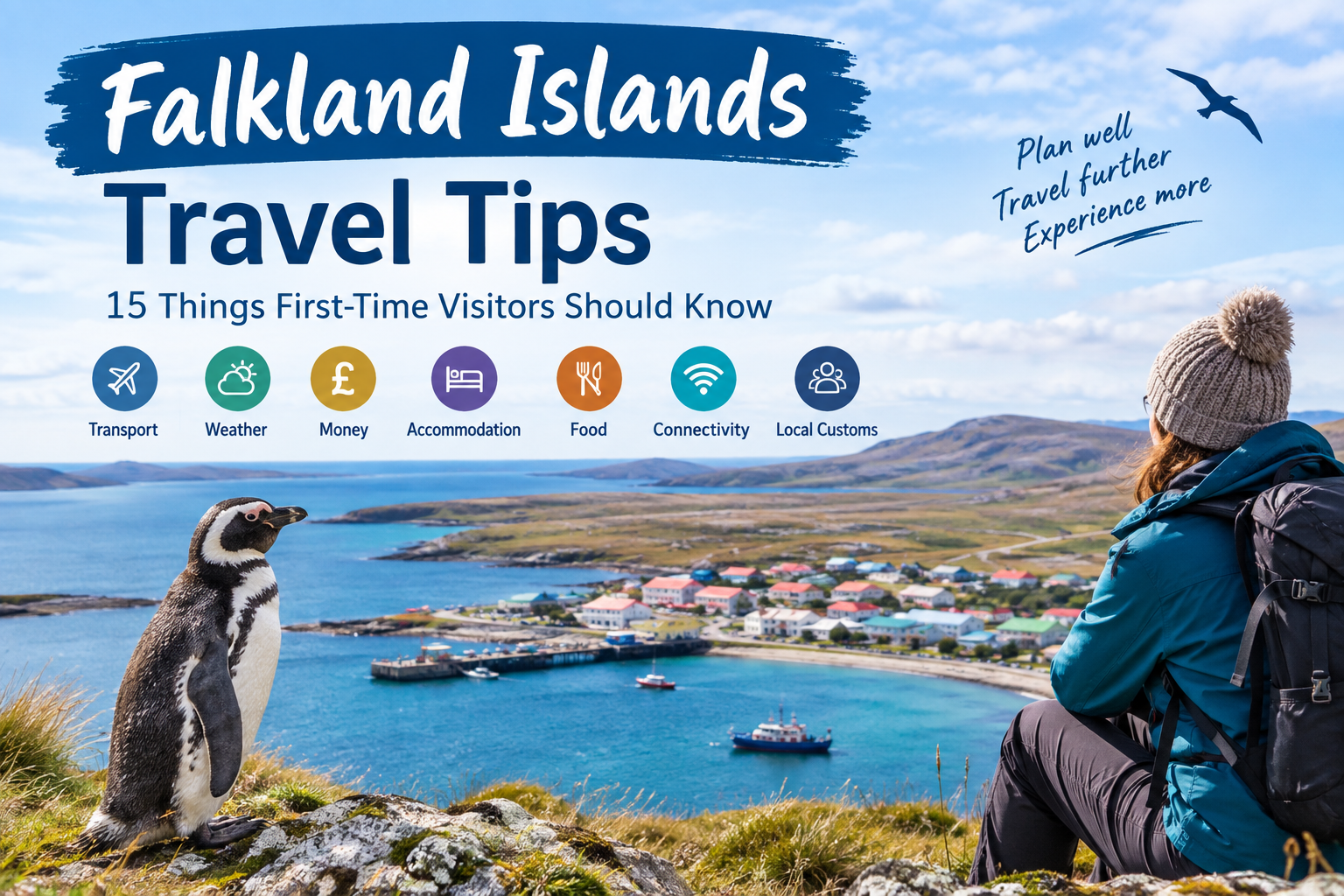
Planning your first trip to the Falkland Islands can be incredibly rewarding. From spectacular coastal landscapes and remote island settlements to penguin colonies and welcoming local communities, the Falklands offer an experience unlike a typical holiday destination.
However, the Islands are remote, and travelling here requires a little more preparation than visiting a major city or conventional tourist destination. Transport schedules, weather, food supplies, accommodation and connectivity can all require advance planning.
To help you prepare, here are 15 essential Falkland Islands travel tips every first-time visitor should know.
1. Plan and Book Your Trip in Advance
One of the most important Falkland Islands travel tips is to avoid leaving your arrangements until the last minute.
Accommodation outside Stanley can be limited, particularly during the busy austral summer months. Some remote locations have only a small number of rooms, meaning availability can disappear quickly.
It is sensible to plan your itinerary, accommodation and transportation before arriving. If you are planning to visit several islands, arrange your connections well in advance.
The official tourism guidance recommends booking accommodation before arrival and planning transportation after your accommodation arrangements are confirmed.
2. Be Prepared for Rapidly Changing Weather
Falkland Islands weather can change surprisingly quickly. You may experience sunshine, wind, clouds and rain during the same day.
Instead of relying on one heavy coat, pack several layers that you can add or remove as conditions change.
A useful packing combination includes:
- Warm base layers
- Fleece or insulating layer
- Waterproof and windproof jacket
- Comfortable walking trousers
- Strong walking boots
- Warm hat and gloves
- Sunglasses
- High-factor sunscreen
Don’t underestimate the sun either. Official visitor advice specifically recommends sunscreen because visitors can burn even when the weather does not feel particularly hot.
3. Understand How Transportation Works
Getting around the Falkland Islands is part of the adventure.
There are several transportation options, including FIGAS domestic flights, road travel, ferries, local guides and vehicle hire. FIGAS is particularly important for reaching many remote settlements and outer islands.
Unlike a conventional airline, FIGAS operates more like an air-taxi service. Flight schedules are determined according to passenger requirements and destinations.
Independent travellers should contact FIGAS in advance with their dates, destinations and number of passengers.
For visitors, the current baggage allowance is 20 kg, and travellers should notify FIGAS in advance if they expect to have excess baggage.
4. Don’t Expect a Conventional Public Transport Network
The Falklands are sparsely populated, so public transportation is not comparable with what you might find in London, New York or other major destinations.
There are bus transfers between Mount Pleasant Airport and Stanley, but there are no scheduled bus services covering the wider Islands. Transfers to remote destinations generally need to be arranged with accommodation providers, guides, tour operators or vehicle services.
If your itinerary includes remote settlements, confirm exactly how you will get there before you arrive.
5. Consider Hiring a 4×4 for Independent Travel
A 4×4 vehicle can be useful if you want to explore independently.
The main islands have road networks connecting settlements and attractions, but many roads outside the main paved routes are gravel or clay. Driving conditions can therefore be very different from those in urban areas.
Some remote wildlife locations also require challenging overland travel, making experienced local drivers particularly valuable.
If you rent a vehicle, drive carefully and understand the road conditions before setting out. Official guidance notes that vehicle recovery services are not generally available, so preparation is important.
6. Carry Enough Cash
Money is another important consideration for first-time visitors.
The Falkland Islands pound (FKP) is the local currency and has the same value as the UK pound sterling. UK sterling is widely used alongside the local currency. Some businesses also accept US dollars, euros and cards, but acceptance varies.
Don’t assume that every remote accommodation provider or business will accept your preferred payment method.
A good approach is to:
- Carry some cash
- Have a payment card available
- Check payment options before travelling to remote locations
- Keep emergency funds separate from your main wallet
There is only one cash point in the Falkland Islands, located at Stanley Services on Bypass Road, and it operates during normal business hours.
7. Book Accommodation Before You Arrive
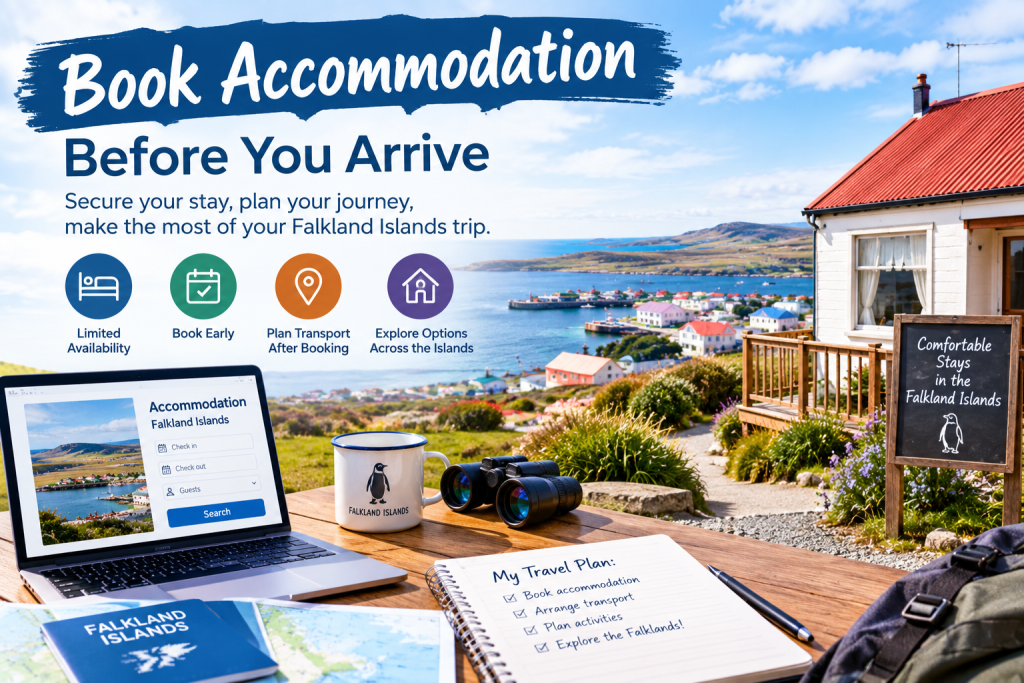
Accommodation can be limited outside Stanley.
Remote farms, guesthouses and lodges may have only a small number of rooms, so spontaneous accommodation can be difficult to arrange during busy periods.
When planning your trip, don’t just think about where you want to visit. Think about where you will sleep each night and how you will get there.
Once your accommodation is booked, contact the relevant transport providers and arrange transfers.
This approach will make your Falkland Islands trip much smoother.
8. Don’t Assume Food Is Available Everywhere
Food planning is especially important when travelling outside Stanley.
Many remote destinations have limited supplies, and some accommodation providers may require advance notice if you want meals.
The official visitor information recommends checking with your accommodation provider before travelling because you may need to take food and supplies with you from Stanley.
Before leaving Stanley, consider purchasing:
- Snacks
- Bottled water
- Packed lunches
- Basic groceries
- Energy bars
- Any special dietary products you require
If you have specific dietary requirements, communicate them to your accommodation provider well before your arrival.
9. Expect Limited Internet and Mobile Connectivity
Don’t plan your Falkland Islands holiday around constant high-speed internet access.
Connectivity can be limited, especially outside Stanley. Official guidance says broadband can sometimes be slow, while Wi-Fi hotspots are available in various locations but may require locally purchased access cards.
Mobile coverage is generally better in Stanley but can be patchier across the Islands. Visitors using international SIM cards should check roaming arrangements before travelling.
Download important information before leaving reliable internet access, including:
- Maps
- Booking confirmations
- Transport details
- Emergency contacts
- Travel documents
- Offline translation tools
Consider connectivity a useful bonus rather than something you can always depend on.
10. Respect Wildlife and Keep Your Distance
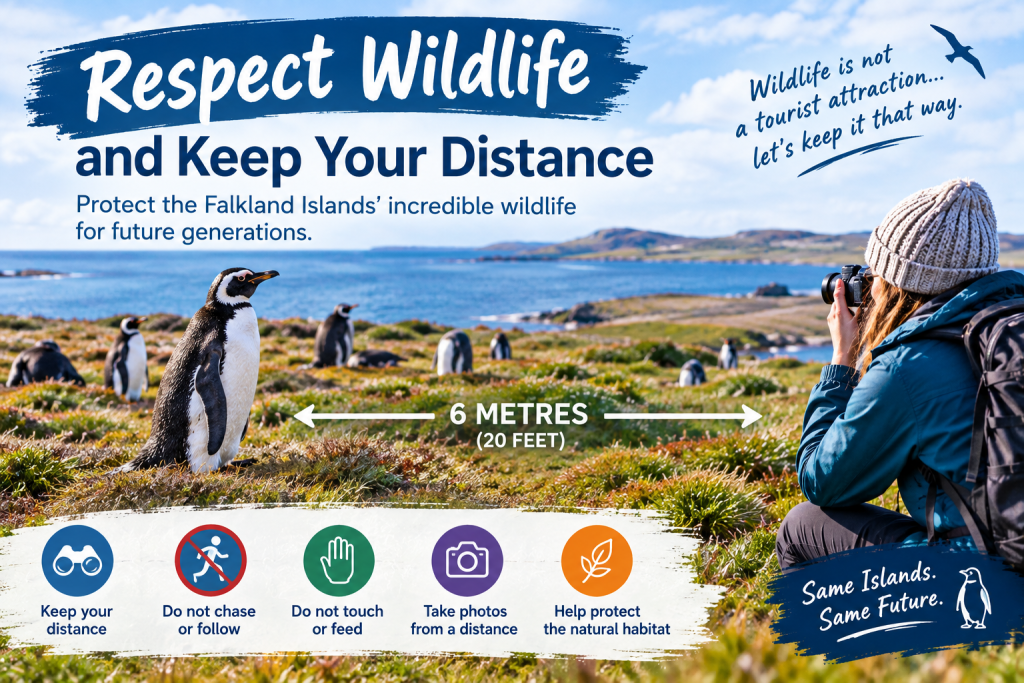
Wildlife is one of the biggest reasons people visit the Falkland Islands.
You may encounter penguins, seals, seabirds and other animals in natural environments. However, remember that these are wild animals, not attractions in a zoo.
The Falklands Countryside Code recommends maintaining a distance of around 6 metres (20 feet) from wildlife and avoiding situations where you block an animal’s route to the sea.
Never chase wildlife for photographs, touch animals or attempt to make them move.
The best wildlife encounters happen when you remain quiet, patient and respectful.
11. Pack Proper Walking Gear
Even if you’re not planning a serious hike, good footwear is essential.
Outside Stanley, many walking areas don’t have conventional paved paths. You may encounter grass, mud, uneven terrain and vehicle tracks.
Bring:
- Waterproof walking boots
- Extra socks
- Waterproof trousers
- Lightweight backpack
- Water bottle
- Snacks
- Basic first-aid kit
- Extra clothing
If you plan to spend extended periods outdoors, tell someone where you are going and when you expect to return. Official safety guidance also recommends carrying sufficient food, water and emergency clothing.
12. Keep Your Itinerary Flexible
One of the best Falkland Islands travel tips is to leave some flexibility in your schedule.
Weather and remote transportation can affect your plans. FIGAS flights, for example, are planned according to travel requirements and operating conditions rather than a conventional fixed timetable.
Avoid creating an itinerary where every activity depends on arriving at exactly one specific time.
A little flexibility can turn unexpected changes into part of the adventure.
13. Learn a Few Local Etiquette Basics
The Falkland Islands are friendly and welcoming, but visitors should respect local communities and traditions.
English is the official language, and UK English is commonly spoken.
Be polite when visiting small settlements and privately owned areas. Follow instructions from accommodation owners, guides and local operators.
Most importantly, follow the Countryside Code when exploring rural areas and wildlife sites.
Visitors should also be aware that the Islands have their own political and cultural sensitivities. The Falkland Islands Government advises visitors to use the local terminology preferred by Islanders.
14. Keep Important Travel Documents With You
Before travelling, make sure your passport, travel insurance, accommodation confirmations and transportation details are organized.
All visitors require a passport valid for the length of their stay. Land-based travellers should also have travel insurance that includes medical evacuation, a return ticket, evidence of accommodation and sufficient funds.
Keep digital and printed copies of important documents when practical.
Your travel folder should include:
- Passport information
- Insurance details
- Accommodation bookings
- Flight confirmations
- FIGAS information
- Emergency contacts
- Important phone numbers
This can save considerable stress if your phone battery dies or you temporarily lose internet access.
15. Visit the Tourist Information Centre in Stanley
Finally, don’t overlook the local Tourist Information Centre.
Located at the Jetty Visitor Centre in Stanley, it can be a useful first stop for maps, visitor information and advice about exploring the Islands.
Local staff can help you understand current conditions and make the most of your time in Stanley and beyond.
Final Thoughts
The Falkland Islands reward travellers who prepare carefully but remain flexible.
The most important Falkland Islands travel tips are simple: book accommodation and transportation ahead, prepare for rapidly changing weather, carry appropriate clothing and footwear, plan your food supplies, keep some cash available and don’t rely completely on mobile connectivity.
Most importantly, take your time. The Falklands aren’t a destination where you need to rush from one attraction to another. The remote landscapes, wildlife, small settlements and journeys between destinations are all part of the experience.
With sensible preparation and respect for the environment and local communities, your first visit can become an unforgettable Falkland Islands adventure.