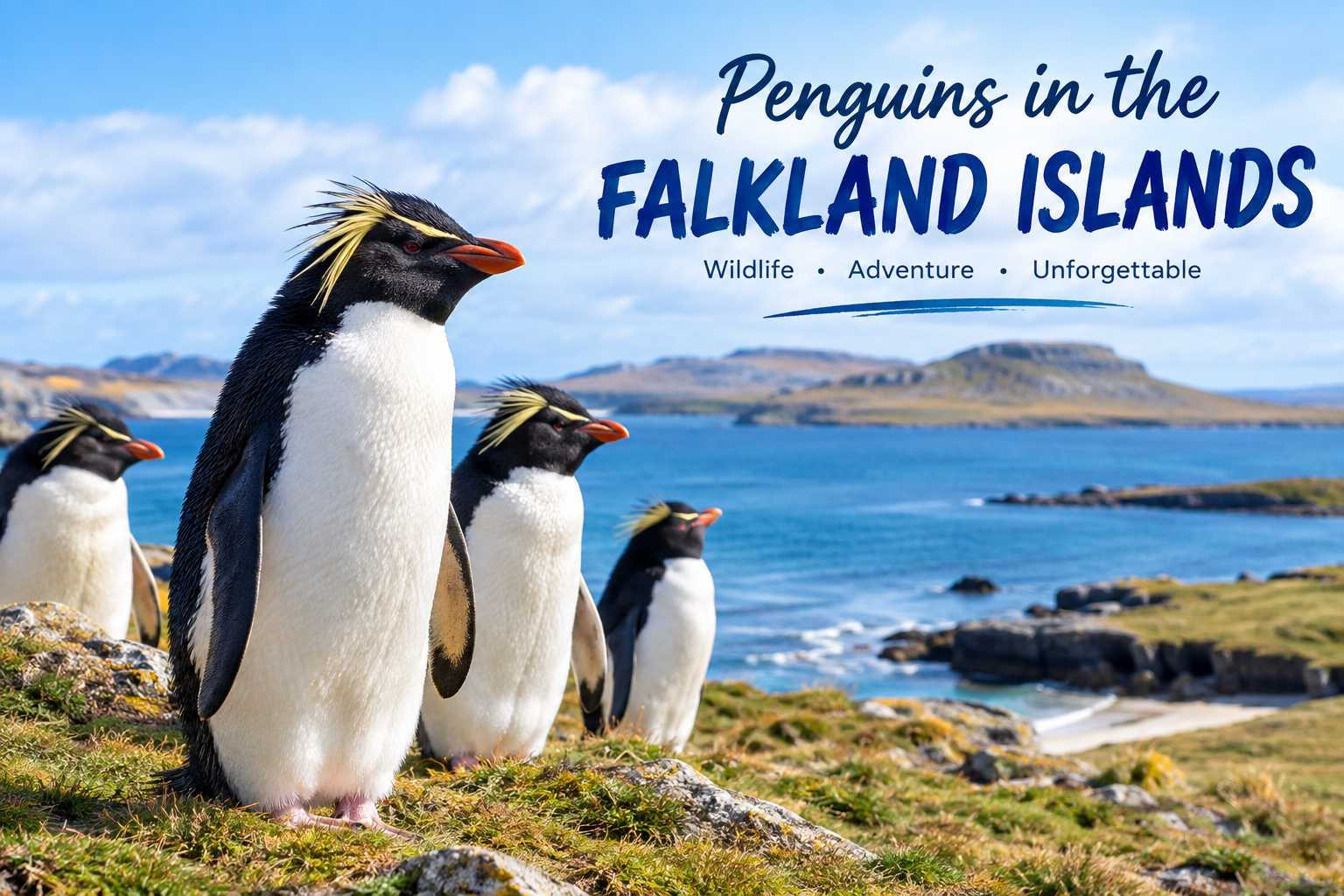
The penguins in the Falkland Islands are one of the biggest reasons travelers visit this remote South Atlantic destination. With huge colonies, dramatic coastlines and several species living in natural surroundings, the Falklands offer some of the world’s most memorable penguin-watching experiences.
The islands are home to five breeding penguin species: Gentoo, King, Magellanic, Macaroni and Rockhopper. Around one million penguins nest across the Falklands during summer, using sandy beaches, rocky shores and grassy coastal areas. The islands are particularly important for Gentoo penguins, with the Falklands supporting the world’s largest population of the species.
For first-time visitors, seeing these remarkable birds is relatively accessible. Some colonies can be reached from Stanley, while others require a longer journey into the countryside or to more remote islands.
This guide explains where to see penguins in the Falkland Islands, which species you can find, the best time to visit, what to expect from their behavior, photography tips and how to watch wildlife responsibly.
Why Are the Falkland Islands Famous for Penguins?
The Falkland Islands are sometimes informally associated with penguins because of the remarkable variety and size of their colonies.
Unlike some wildlife destinations where visitors observe animals from behind fences, many Falkland Islands penguin colonies are located in open natural environments. This can make the experience feel much more immersive.
Gentoo and Magellanic penguins can be found relatively close to Stanley, while larger and more remote colonies require longer journeys. The Falkland Islands Tourist Board describes the islands as one of the world’s best places to view penguins in their natural environment.
The variety is another major attraction. Depending on your itinerary, you may have the opportunity to see several different species during one trip.
The 5 Penguin Species in the Falkland Islands
1. Gentoo Penguins
Gentoo penguins are among the easiest species to encounter in the Falkland Islands.
They are resident throughout the year and occur at numerous locations across the archipelago. Gentoo penguins are recognizable by their white markings, orange-colored bills and distinctive waddling movements.
They can often be seen traveling between their colonies and the sea along established “penguin highways.” Some birds may travel several kilometers inland between their nesting areas and the coast.
For visitors, watching a Gentoo colony can be fascinating because the birds are constantly moving—walking, calling, feeding and interacting with one another.
2. King Penguins
King penguins are arguably the most spectacular penguins to see in the Falklands.
Their tall bodies, orange markings and elegant appearance make them instantly recognizable. The best-known location for them is Volunteer Point, which is home to the largest breeding group of King penguins in the islands.
Volunteer Point also supports Gentoo and Magellanic penguins, making it possible to see three species in the same general area.
King penguins have a particularly long breeding cycle. The Falkland Islands Tourist Board notes that their breeding cycle can last up to 14 months, meaning they can raise only two chicks in approximately three years.
3. Magellanic Penguins
Magellanic penguins are another species frequently encountered by visitors.
They are widely distributed throughout the Falklands but are summer residents rather than year-round residents. They are burrowing penguins and are known for their distinctive braying call, which has led to the local nickname “Jackass” penguins.
Their underground burrows make it particularly important for visitors to watch where they walk. Avoid stepping over or near nesting burrows and always follow local instructions.
4. Rockhopper Penguins
Rockhopper penguins are famous for their energetic behavior and distinctive appearance.
They get their name from their habit of moving across rocky terrain by hopping from one surface to another. Watching them navigate steep coastal environments can be one of the most entertaining wildlife experiences in the Falklands.
Rockhoppers breed in the Falklands during the summer months, with significant numbers of the world’s population choosing the islands for breeding.
They are generally associated with more remote locations than the easily accessible colonies around Stanley, so seeing them may require additional planning.
5. Macaroni Penguins
Macaroni penguins are the fifth breeding penguin species found in the Falkland Islands.
They are less commonly encountered by casual visitors than Gentoo, Magellanic or King penguins, but they add another reason for wildlife enthusiasts to explore beyond the most accessible locations.
Travelers interested in seeing all five species should consider a longer itinerary and discuss possible wildlife locations with local tour operators.
Where to See Penguins in the Falkland Islands
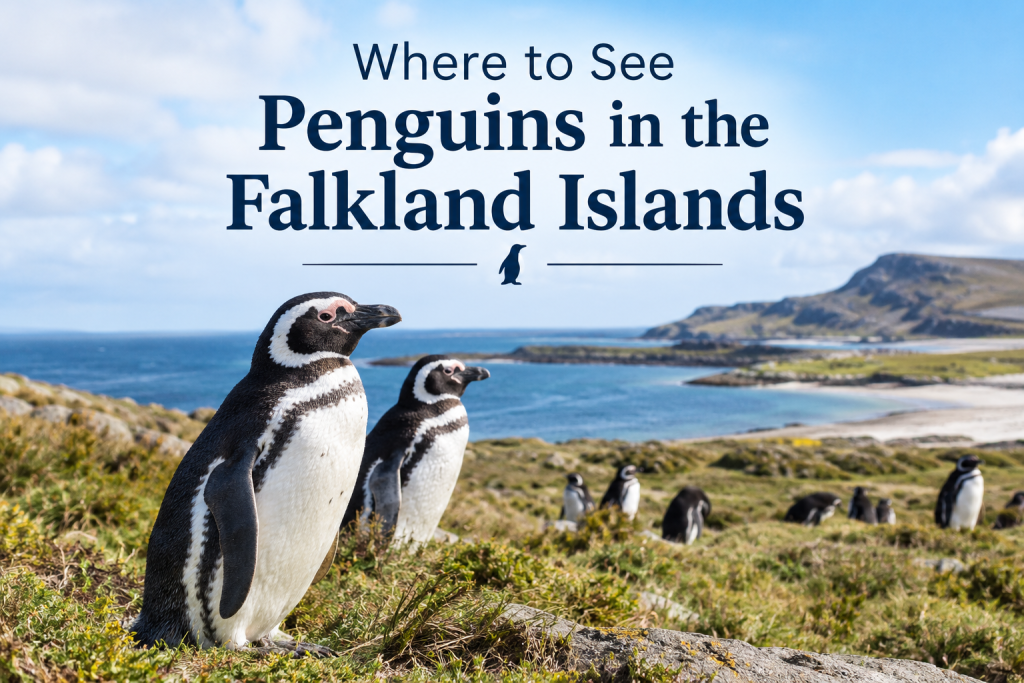
One of the best things about penguin watching in the Falklands is the range of locations available.
Gypsy Cove
Gypsy Cove is one of the easiest wildlife locations to visit from Stanley.
Located on the Cape Pembroke peninsula, it is only around 6.5 km from Stanley and is considered the most accessible wildlife site from the capital. Magellanic penguins breed here in underground burrows, while other coastal birds can also be seen.
Its accessibility makes Gypsy Cove a particularly good choice for cruise passengers or travelers with limited time.
Yorke Bay
Yorke Bay is another important penguin-viewing location near Stanley.
Gentoo penguins can be found in the area, and the location can provide an excellent introduction to Falkland Islands wildlife without requiring a long expedition.
Visitors should follow current access arrangements and guide requirements because wildlife-site rules can vary. Current cruise-day guidance, for example, requires visitors to Yorke Bay to be accompanied by a guide.
Volunteer Point
For many visitors, Volunteer Point is the highlight of a Falkland Islands penguin trip.
The location is home to the largest breeding group of King penguins in the islands and also has Gentoo and Magellanic colonies.
Volunteer Point is considerably farther from Stanley than Gypsy Cove and requires an overland journey. The official visitor information recommends using a local guide, and permission is required before visiting the privately owned nature reserve.
The journey may be long and bumpy, but the reward is an unforgettable encounter with a large King penguin colony.
Other Locations
Penguins can also be found at numerous destinations around the Falkland Islands.
The Falkland Islands Tourist Board identifies locations including The Murrell, Bertha’s Beach and various outer islands as places where visitors can encounter different penguin species.
If your goal is to see as many species as possible, a multi-day itinerary is generally more suitable than a short visit.
Best Time to See Penguins in the Falkland Islands
The best time to see the greatest variety of penguin activity is generally during the Southern Hemisphere summer, particularly from late spring through summer.
December through February is the summer period, and January can be especially rewarding for wildlife viewing. The Falkland Islands Tourist Board describes January as a prime wildlife month, with Gentoo penguins present year-round and Magellanic, Rockhopper and King penguins providing important seasonal viewing opportunities.
For Volunteer Point specifically, January through March can be a particularly interesting period because visitors may see chicks and developing young birds.
However, wildlife is naturally unpredictable. Conditions, breeding stages and animal behavior can vary from year to year.
What Penguin Behavior Should You Expect?
Penguins are active, social birds, and a colony can be surprisingly noisy.
You may see penguins:
- Walking between the sea and their nesting areas
- Calling to one another
- Preening their feathers
- Feeding chicks
- Squabbling with neighboring birds
- Swimming close to shore
- Resting on beaches
- Traveling along established routes
Gentoo penguins, for example, can create recognizable routes between their colonies and the sea. Magellanic penguins may spend time around their burrows, while King penguins can often be seen standing together in large groups.
One of the best parts of the experience is simply sitting quietly and observing. You don’t need to approach an animal to have a memorable wildlife encounter.
Penguin Photography Tips
The Falkland Islands are an excellent destination for wildlife photography because many colonies are relatively accessible.
However, getting a great photograph should never come at the expense of disturbing an animal.
Use a zoom lens
A telephoto or zoom lens lets you capture detailed images without moving too close. The official Volunteer Point guidance specifically recommends maintaining the required distance and using camera zoom rather than approaching wildlife.
Shoot at eye level
When practical and safe, photographs taken closer to the penguin’s eye level can create a more natural perspective.
Photograph behavior
Don’t focus only on portraits. Try capturing:
- Penguins walking together
- Chicks following adults
- Penguins entering the sea
- Birds interacting
- Groups moving along the beach
- Penguins against dramatic landscapes
Protect your equipment
Falkland Islands weather can change quickly. Wind, rain and spray can create challenging conditions, so keep your camera protected when necessary.
At destinations such as Volunteer Point, the journey itself can also be rough, so a padded camera or travel case is useful.
Penguin Watching Etiquette
Responsible wildlife viewing is essential.
The Falkland Islands’ Countryside Code recommends maintaining a minimum distance of 6 metres (20 feet) from wildlife. If an animal approaches you, remain calm and avoid sudden movements.
There are several other important rules.
Never block a penguin’s route
Penguins need to travel between their colonies and the sea. Never stand in their path or force them to change direction.
Don’t touch wildlife
Even if a penguin approaches you, don’t attempt to touch, feed or chase it.
Don’t disturb burrows
Magellanic penguins nest underground, so watch where you step and avoid areas with visible burrows.
Follow local guides
At some sites, guides and wardens help protect both visitors and wildlife. Follow their instructions, stay on designated routes and respect restricted areas.
Don’t use drones without permission
Drone rules vary by location. At Volunteer Point, drone flying is prohibited unless written permission has been obtained from the landowner.
Leave no trace
Take your rubbish with you and avoid disturbing vegetation, nesting sites or other wildlife.
What to Bring for a Penguin-Watching Trip
The Falklands can experience rapidly changing weather, so preparation is important.
Pack:
- Waterproof and windproof jacket
- Warm layers
- Strong walking shoes or boots
- Sunscreen
- Sunglasses
- Hat and gloves
- Water bottle
- Snacks
- Binoculars
- Camera and spare batteries
- Power bank
- Weather protection for camera equipment
The official visitor guidance recommends layers, waterproof clothing, strong walking boots and sun protection because weather can change quickly and sunburn can occur even when conditions don’t feel particularly hot.
If you’re traveling outside Stanley, remember that many destinations are remote. Check in advance whether food and other supplies are available at your destination.
Tips for First-Time Penguin Visitors
If this is your first wildlife trip to the Falkland Islands, keep your itinerary flexible.
Allow plenty of time for travel, especially when visiting remote colonies. Volunteer Point, for example, requires a substantial overland journey from Stanley, while locations such as Gypsy Cove are much easier to reach.
Don’t try to see every penguin species in a single day. A slower itinerary usually produces a better wildlife experience.
Most importantly, remember that you are visiting the animals’ natural environment. The goal isn’t to make the penguins come closer—it is to observe them behaving naturally.
Final Thoughts
The penguins in the Falkland Islands are a remarkable part of the destination’s natural heritage. From Magellanic penguins near Stanley to Gentoo colonies, energetic Rockhoppers and the spectacular King penguins of Volunteer Point, the islands offer an extraordinary range of wildlife experiences.
For first-time visitors, Gypsy Cove and Yorke Bay provide convenient options close to Stanley, while Volunteer Point offers one of the most memorable King penguin experiences in the Falklands.
Plan around the Southern Hemisphere summer if you want to experience peak penguin activity, prepare for changing weather, bring suitable photography equipment and, above all, give wildlife plenty of space.
With responsible planning and a little patience, watching penguins in the Falkland Islands can become one of the most unforgettable experiences of your South Atlantic adventure.