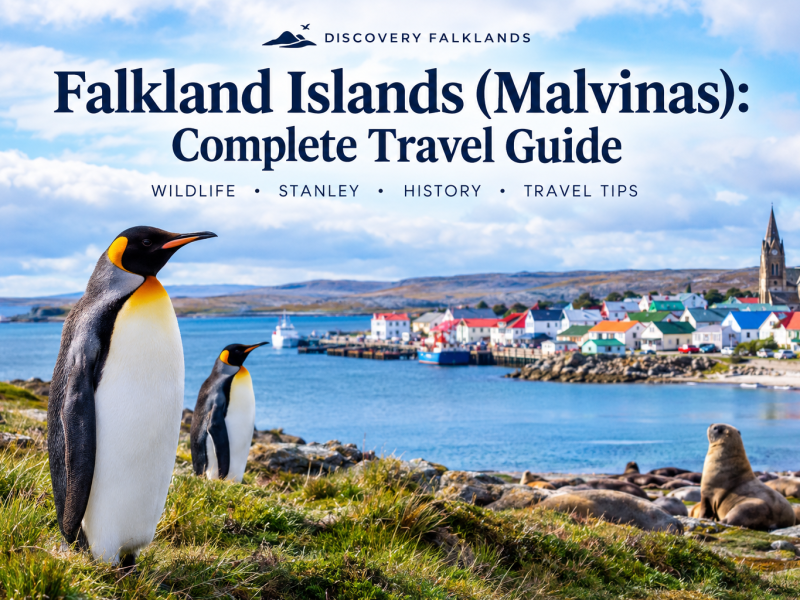
If you love wide-open landscapes, dramatic coastlines, remote wilderness and wildlife encounters, hiking in the Falkland Islands offers an experience unlike a typical walking holiday. Instead of crowded trails and busy mountain resorts, you can explore open hills, beaches, grasslands and coastal landscapes where wildlife is often part of the journey.
The Falkland Islands Tourist Board describes walking and hiking as one of the destination’s key outdoor experiences, with options ranging from leisurely walks to more challenging mountain routes. Self-guided walking opportunities are available in several locations, while local accommodation providers and the Jetty Visitor Centre can provide information about routes.
For first-time visitors, however, hiking here requires a little more preparation than simply putting on a pair of shoes and following a marked trail. Weather can change quickly, paths can be uneven or absent outside Stanley, and remote areas require sensible planning.
Here’s everything you need to know before setting out.
Why Go Hiking in the Falkland Islands?
The biggest attraction of hiking in the Falkland Islands is the feeling of wilderness.
The islands have more than 700 islands and a remarkably varied landscape, including rugged hills, rocky coastlines, beaches and expansive open countryside.
Many walks combine scenery with opportunities to see wildlife. Depending on where you go, you may encounter penguins, seabirds, seals and other animals in their natural surroundings.
Unlike conventional wildlife parks, these animals aren’t confined to viewing areas. The Falkland Islands Tourist Board emphasizes that wildlife is entirely natural and visitors should respect animals and give them plenty of space.
For photographers and nature lovers, this combination of open landscapes and wildlife makes hiking particularly rewarding.
Best Places for Hiking in the Falkland Islands
There isn’t one single trail system covering the entire archipelago. Hiking opportunities vary considerably between Stanley, East Falkland, West Falkland and the smaller islands.
Here are several places worth considering.
1. Gypsy Cove
Gypsy Cove is one of the easiest places to add a nature walk to a Falkland Islands itinerary.
Located close to Stanley on the Cape Pembroke peninsula, it is one of the most accessible wildlife sites from the capital. The area combines coastal scenery, beaches and wildlife, making it suitable for visitors who don’t want a demanding mountain hike.
It is particularly interesting for visitors hoping to see Magellanic penguins.
2. Cape Pembroke
Cape Pembroke offers an excellent combination of walking, coastal scenery and open landscapes.
The area includes the route toward the Cape Pembroke Lighthouse, and the official tourism information notes that hiking to the lighthouse takes around three hours, while the lighthouse can also be reached by vehicle along a track.
Because the landscape is exposed, check the weather before leaving and take adequate clothing and water.
3. Mount Tumbledown
For visitors interested in combining hiking with Falkland Islands history, Mount Tumbledown provides a different experience.
The mountain overlooks Stanley and was the site of one of the final battles before the Argentine surrender during the 1982 conflict.
The route is more suitable for travelers looking for a hill walk rather than a simple town stroll. Conditions can make walking more challenging, so sturdy footwear and appropriate clothing are important.
4. Mount Usborne
Mount Usborne is an obvious choice for travelers interested in a more substantial hike.
At 705 metres (2,312 feet), it is the highest peak in the Falkland Islands. The summit offers broad views over the surrounding landscape.
Because this is a more remote outdoor experience, don’t approach it like a heavily managed tourist trail. Plan your transportation, route, food, water and return time before setting out.
5. Stanley Walking Routes
You don’t need to leave Stanley to enjoy walking.
The Falkland Islands Tourist Board provides self-guided town trails, including circular walks that begin and end at the public jetty.
These walks can be a good introduction to the area before attempting longer countryside routes.
How Difficult Is Hiking in the Falkland Islands?
One of the biggest advantages of hiking in the Falkland Islands is the variety of experiences.
You can choose between:
- Easy: town walks, short coastal walks and gentle sightseeing routes
- Moderate: longer coastal and countryside walks over uneven terrain
- Challenging: mountain and remote wilderness hikes requiring greater preparation
However, difficulty isn’t determined only by distance or elevation.
Outside Stanley, visitors may discover that there are few conventional footpaths. The official safe-travel guidance warns that many countryside routes may involve vehicle tracks or uneven, grassy and sometimes muddy ground.
That means a relatively short walk can become tiring if the terrain is wet or windy.
Before choosing a route, consider:
- Your fitness level
- Weather conditions
- Terrain
- Available daylight
- Distance from assistance
- Mobile-phone coverage
- Whether you have appropriate navigation information
Falkland Islands Weather: What Hikers Should Expect

Weather is one of the most important considerations when hiking in the Falkland Islands.
Conditions can change rapidly, and official visitor guidance uses the familiar phrase “four seasons in one day” to describe the variability.
You could begin a hike under clear skies and later experience strong wind, rain or significantly cooler conditions.
For that reason, don’t dress based solely on the weather when you leave your accommodation.
Instead, use layers.
A practical hiking clothing system might include:
- Moisture-managing base layer
- Warm mid-layer
- Waterproof and windproof outer layer
- Comfortable hiking trousers
- Warm socks
- Strong walking boots
- Hat and gloves
- Sun protection
The official visitor guidance specifically recommends layers, a waterproof jacket and strong boots for walking outside Stanley.
When Is the Best Time to Go Hiking?
The best time depends on the type of experience you’re looking for, but the warmer part of the year generally offers attractive conditions for outdoor activities.
The Falkland Islands’ tourism planning documents identify September through April as an increasingly important period for outdoor activities, while bird and wildlife experiences remain a major visitor interest.
Spring can be particularly appealing for nature lovers, with the islands’ wildlife and plant life becoming increasingly active. The official nature itinerary highlights spring flowers and abundant wildlife as seasonal attractions.
However, don’t assume summer means predictable weather. Wind and rapid changes remain important considerations.
Whenever you visit, check the local forecast before setting off.
Wildlife You May See While Hiking
Wildlife is one of the highlights of hiking in the Falkland Islands.
Depending on your location and season, you may encounter:
- Magellanic penguins
- Gentoo penguins
- King penguins
- Rockhopper penguins
- Albatrosses
- Seabirds
- Seals
- Other coastal and grassland wildlife
Gypsy Cove is particularly accessible from Stanley and provides opportunities to see Magellanic penguins.
But wildlife encounters require responsible behavior.
The Falkland Islands’ guidance recommends keeping at least 6 metres (20 feet) away from wildlife. Visitors should never block an animal’s route to the sea, feed wildlife or deliberately disturb colonies.
If a penguin approaches you, stay calm and allow the animal to decide how close it wants to come.
Hiking Safety in the Falkland Islands
The Falkland Islands are generally a safe destination, but hiking in remote countryside comes with different considerations from walking around a city.
The main issues for hikers are weather, terrain, wildlife and isolation rather than typical urban crime.
Before starting a hike, follow these precautions.
Check the weather
Look at the forecast shortly before leaving and be prepared for changes.
Tell someone your plans
Let your accommodation provider, guide or another responsible person know where you’re going and when you expect to return. Official guidance specifically recommends sharing your destination and expected return time.
Carry enough water and food
Remote destinations may have limited access to food and services. Check with your accommodation provider beforehand if you’re traveling outside Stanley.
A map or reliable map app can be extremely useful. Mobile coverage is available across much of the islands but isn’t guaranteed everywhere.
Bring basic first aid
A small first-aid kit is sensible for longer walks and remote routes.
Respect the terrain
Don’t assume an open grassy landscape is easy walking. Wet, uneven or muddy ground can make progress considerably slower.
What to Pack for Hiking in the Falkland Islands

A good packing list can make a huge difference.
Essential clothing
- Waterproof jacket
- Warm layers
- Hiking trousers
- Strong walking boots
- Warm socks
- Hat
- Gloves
Sun protection
Sunscreen is essential. The official tourism guidance specifically warns that visitors can burn easily and recommends high-factor sun protection.
Also consider:
- Sunglasses
- Sun hat
- Lip balm with SPF
Hiking equipment
For longer walks, consider taking:
- Daypack
- Water bottle
- Snacks
- Map or navigation app
- Phone with sufficient battery
- Power bank
- Basic first-aid kit
- Emergency shelter or bivvy bag for remote excursions
The official safe-travel guidance recommends extra clothing and emergency shelter considerations for longer periods outdoors.
Should You Hire a Guide?
It depends on your route and experience.
Self-guided walking is possible, and the Falkland Islands Tourist Board provides walking information and guides. However, visitors undertaking self-guided walks should be comfortable with route-finding and understand their responsibilities in the natural environment.
For remote locations or more demanding hikes, a local guide can provide valuable knowledge about:
- Weather
- Terrain
- Wildlife
- Access
- Local conditions
- Transportation
- Route selection
For first-time visitors unfamiliar with remote wilderness hiking, local advice can make planning much easier.
A Simple First-Time Hiking Plan
If this is your first visit, don’t try to pack too many challenging hikes into a short trip.
A simple approach could be:
Day 1: Explore Stanley on foot and use one of the town trails.
Day 2: Visit Gypsy Cove and explore the surrounding coastal landscape.
Day 3: Try a longer Cape Pembroke walk if weather and fitness allow.
Later in your trip: Consider a more demanding countryside or mountain hike such as Mount Tumbledown or Mount Usborne, depending on access, conditions and local advice.
This approach gives you time to understand the local weather and terrain before committing to longer wilderness walks.
Final Tips for First-Time Hikers
Hiking in the Falkland Islands is less about ticking off dozens of marked trails and more about experiencing an extraordinary natural environment at your own pace.
Keep these principles in mind:
- Check the weather before every hike.
- Dress in layers.
- Carry waterproof clothing.
- Wear strong footwear outside Stanley.
- Take enough food and water.
- Tell someone your plans.
- Carry navigation equipment.
- Don’t rely completely on mobile coverage.
- Keep at least 6 metres from wildlife.
- Never block an animal’s route to the sea.
- Leave wildlife and natural objects undisturbed.
- Allow extra time when walking on uneven terrain.
The official tourism resources also provide walking guides and visitor information that can help you plan specific routes before setting off.
Conclusion
Hiking in the Falkland Islands offers something that is increasingly difficult to find: genuine space, quiet and wilderness. From accessible walks around Stanley and Gypsy Cove to coastal adventures and mountain hikes such as Mount Usborne, there are experiences for different interests and fitness levels.
The key to enjoying the islands is preparation. Weather can change quickly, countryside terrain can be rough, and wildlife encounters require patience and respect. Pack layers, waterproof clothing, strong boots, water, food and navigation equipment, and always let someone know your plans before heading into remote areas.
With sensible preparation, your hike can become one of the most memorable parts of a Falkland Islands adventure—whether you’re walking beside the coast, climbing a hill, watching penguins or simply enjoying the silence of the open landscape.