
If you want to experience the heart of the Falkland Islands on foot, a Stanley walking tour is one of the easiest ways to explore the capital. Stanley is compact, and many of its principal sights are concentrated around the waterfront and central streets. The official Falkland Islands tourism authority specifically recommends exploring the town on foot, with attractions including Christ Church Cathedral, the Whalebone Arch, Victory Green, commemorative monuments and the Historic Dockyard Museum.
A walking tour also lets you notice details that can be easy to miss from a vehicle: colorful buildings, historic cottages, maritime landmarks, memorials, harbor views, and distinctive British-style features.
This guide highlights 10 of the best Stanley Falkland Islands attractions to include on a self-guided sightseeing day.
Stanley Walking Tour at a Glance
| Stop | What to See | Suggested Time |
|---|---|---|
| 1 | Christ Church Cathedral | 20–30 min |
| 2 | Whalebone Arch | 10–15 min |
| 3 | Victory Green | 15–20 min |
| 4 | Government House | 10–15 min |
| 5 | Liberation Memorial | 10–15 min |
| 6 | Historic Dockyard Museum | 1–2+ hours |
| 7 | Lady Elizabeth Shipwreck | 15–20 min |
| 8 | Jubilee Villas | 10 min |
| 9 | Pioneer Cottages | 10–15 min |
| 10 | Stanley Waterfront & Harbour | 20–30 min |
The official historic Stanley town trail describes an easy circular route of approximately 4 km, taking about an hour without extended sightseeing stops.
1. Christ Church Cathedral
Begin your Stanley Falkland Islands walking tour at one of the town’s most recognizable landmarks: Christ Church Cathedral.
Located close to the waterfront, the cathedral is the world’s most southerly Anglican cathedral. It was consecrated in 1892 and features stained-glass windows, a pipe organ, historic memorabilia and locally produced needlework.
The building is more than an architectural attraction. Its interior contains details connected with life in the Falkland Islands, making it an excellent first stop for understanding the character and history of Stanley.
Take a few minutes to look at the stained glass and other decorative details before continuing your walk.
Photography tip: The cathedral and surrounding waterfront make a particularly recognizable Stanley photograph.
2. See the Whalebone Arch
Immediately beside the cathedral is the iconic Whalebone Arch.
Constructed in 1933 from the jawbones of two blue whales, the arch commemorated the centenary of continuous British administration in the Falklands. Today, it has become one of Stanley’s best-known visual symbols.
This is a quick stop, but it’s one you shouldn’t skip.
The enormous whale bones create an unusual contrast with the cathedral behind them, making this one of the most distinctive photographic spots on the walking route.
Take a moment to read about the arch and appreciate its connection to the islands’ maritime and whaling history.
3. Walk Through Victory Green
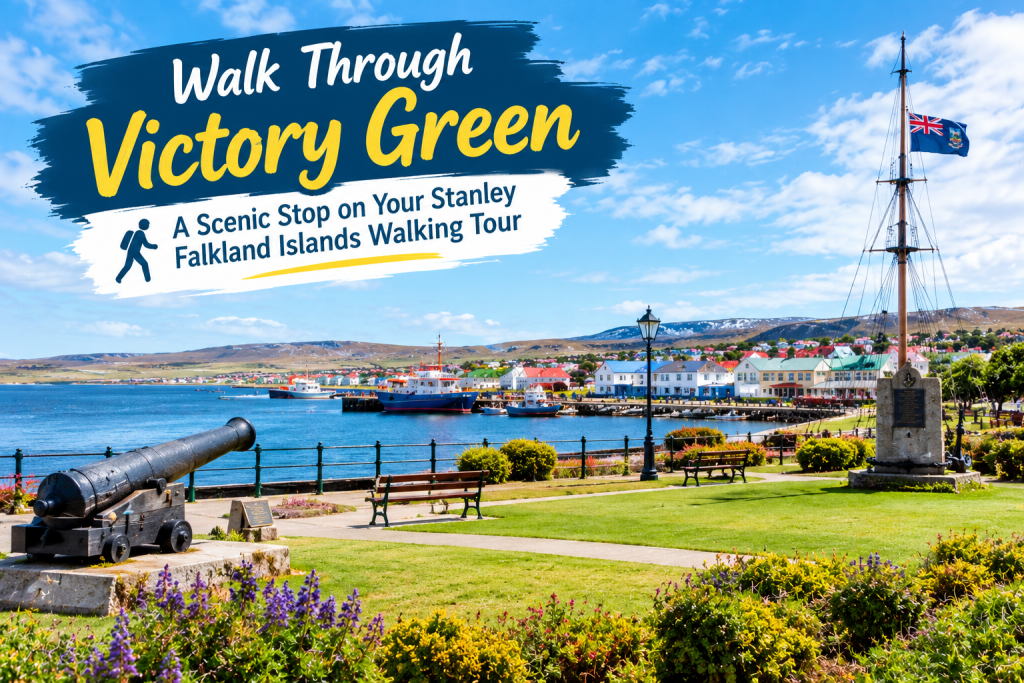
Continue along the waterfront to Victory Green, an open area with important connections to Stanley’s history.
The waterfront is one of the most enjoyable parts of exploring Stanley on foot. You can take in views across the harbor while seeing historic maritime features and monuments.
The Falkland Islands tourism authority notes that Victory Green includes the mizzen mast from the SS Great Britain, adding another reminder of Stanley’s maritime heritage.
This is a good place to slow down rather than simply pass through.
If you’re visiting Stanley from a cruise ship, the waterfront can also provide an easy introduction to the town before heading deeper into the central streets.
4. Admire Government House
Another interesting stop is Government House, a prominent historic building surrounded by carefully maintained grounds.
The building provides a glimpse into Stanley’s administrative and colonial-era heritage and is also a popular photography subject.
You don’t necessarily need a long visit here. Instead, appreciate the architecture and surroundings as part of your walking route.
The official tourism guide describes Government House as a much-photographed building and an important feature of Stanley’s waterfront area.
This is a good example of why walking is useful: you’re able to notice buildings and architectural details that might otherwise become background scenery.
5. Visit the Liberation Memorial
As you continue around Stanley, you’ll encounter several memorials connected with the islands’ history.
The Liberation Memorial commemorates the liberation of the Falkland Islands following the 1982 conflict.
It forms part of a wider collection of memorials around the waterfront, including the Cross of Sacrifice and memorials connected with the Royal Marines and the First World War.
When visiting these locations, take time to understand their historical context and remember that they remain meaningful places for the local community.
For travelers interested in Falklands history, this section of the walk can be one of the most significant.
6. Spend Time at the Historic Dockyard Museum
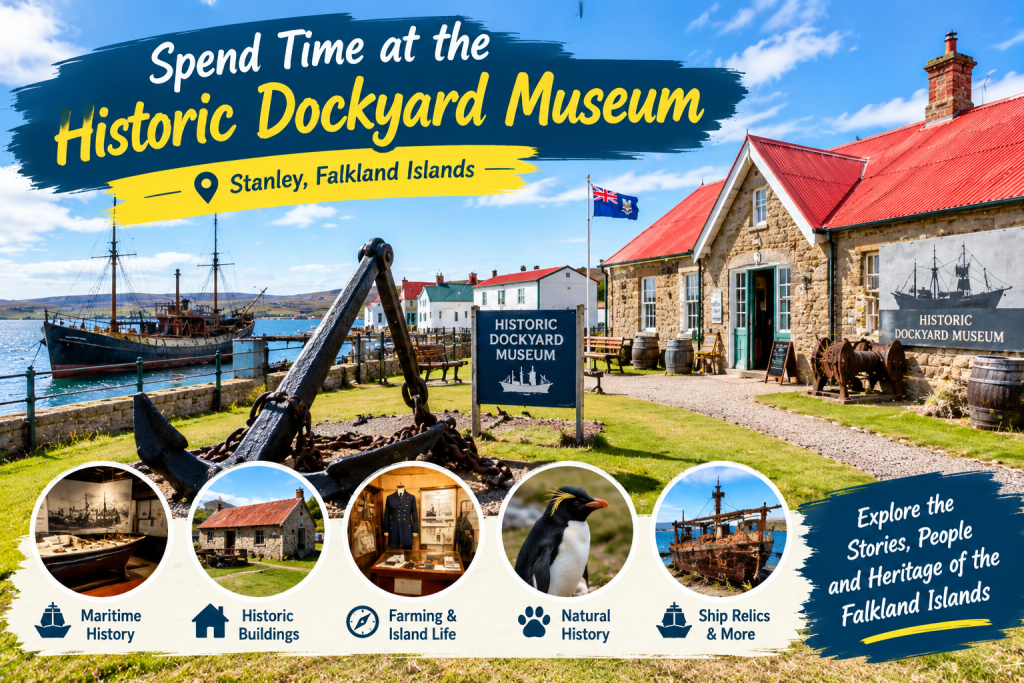
Set aside the most time on your Stanley walking tour for the Historic Dockyard Museum.
Located on Ross Road, the museum explores the social, maritime and natural history of the Falkland Islands. Exhibits include farming equipment, recreations of historic buildings, maritime artifacts, ship relics and natural-history displays.
The museum complex itself contains several historic buildings, including a smithy, boathouse and former gaol. Cartmell Cottage can also form part of the museum experience.
If you are interested in understanding the Falkland Islands beyond their scenery and wildlife, this is an especially useful stop.
Planning tip: Check current opening times before visiting because hours can vary seasonally and may be extended on cruise-ship days.
7. See the Lady Elizabeth Shipwreck
The Lady Elizabeth Shipwreck, often called “Lady Liz,” is another distinctive Stanley landmark.
The ship lies at the eastern end of Stanley Harbour. It was launched in Sunderland in 1879 and suffered damage while rounding Cape Horn in 1913. After arriving in Stanley for repairs, it eventually ended up in its current position following a storm in 1936.
The wreck is particularly interesting for travelers who enjoy maritime history and photography.
Its weathered appearance against the harbor creates a very different atmosphere from the colorful buildings and formal landmarks in central Stanley.
Bring a camera and take time to view the ship from suitable public areas.
8. Admire Jubilee Villas
Stanley isn’t only about famous monuments. Some of its historic residential buildings are worth seeking out too.
Jubilee Villas date from 1887 and were built to commemorate Queen Victoria’s Golden Jubilee. Their traditional British terraced-house appearance provides an interesting contrast with Stanley’s wider mix of architecture.
They are an easy addition to a walking itinerary and don’t require a long stop.
This is one of the advantages of exploring Stanley on foot: you can combine major attractions with smaller architectural details and historic buildings.
Remember that many residential properties are private, so admire them from public areas rather than entering private property.
9. Discover the Pioneer Cottages
For another glimpse into Stanley’s past, look for the colorful Pioneer Cottages around Drury Street and Pioneer Row.
The cottages are associated with the early settlement and development of Stanley and are now mainly privately owned.
Their colorful appearance makes them attractive photography subjects, while their design provides a visual connection with earlier island life.
Nearby Cartmell Cottage, associated with the Falkland Islands Museum and National Trust, provides an opportunity to learn more about historic life in the islands.
For photographers, this part of the route is particularly worthwhile because it offers a different perspective from the waterfront monuments.
10. Finish Along Stanley’s Waterfront
End your Stanley walking tour by returning to the waterfront and spending some time around the harbor.
The seafront brings together many of the features that make Stanley distinctive: colorful buildings, historic vessels and maritime reminders, memorials, the cathedral, and views across the sheltered harbor.
The official tourism guide recommends a walk along the seafront and highlights several of these attractions along the route.
It’s also a pleasant place to slow down after visiting the museums and historic sites.
Look for traditional red telephone boxes and post boxes along Ross Road, another small detail that contributes to Stanley’s distinctive character.
How to Plan Your Stanley Walking Tour
A self-guided tour is straightforward, but a little preparation will make the experience more enjoyable.
Start Early
Starting earlier gives you more time for the museum, cathedral and photography stops.
If you’re visiting from a cruise ship, however, check your ship’s schedule and allow enough time to return before departure.
Check Opening Times
Outdoor landmarks such as the Whalebone Arch can be viewed at any time, but attractions such as the Historic Dockyard Museum have specific opening hours. The museum also has seasonal schedules.
Wear Comfortable Shoes
Although the central Stanley route is generally manageable, comfortable walking shoes are still important.
The official Stanley town trail describes the historic route as mostly paved with some gravel sections and generally easy terrain.
Prepare for the Weather
Stanley’s weather can be windy and changeable. Bring layers and a waterproof outer layer, particularly if you’ll be spending several hours outdoors.
Allow More Than an Hour
The official historic walking trail can take around an hour when walked continuously, but that’s very different from a sightseeing day.
If you plan to enter the museum, visit the cathedral, take photographs, read memorials and stop along the waterfront, allow several hours.
Consider a Guided Tour
If you want historical context rather than simply seeing the sights, a local walking tour can be useful.
Current tourism information lists guided walking options in Stanley, including heritage walks that cover the cathedral, Whalebone Arch, Victory Green, Jubilee Villas, Government House and the Liberation Monument.
Best Time for a Stanley Walking Tour
The ideal time depends on your overall Falkland Islands itinerary.
The main visitor season runs through the warmer months, when outdoor sightseeing is generally more convenient. However, Stanley’s attractions can be experienced throughout the year, subject to opening schedules and weather.
If you’re arriving on a cruise, your available time will naturally be more limited. In that situation, prioritize the central attractions and check your ship’s shore-excursion schedule.
What to Bring
For a comfortable Stanley sightseeing day, consider packing:
- Comfortable walking shoes
- Waterproof and windproof jacket
- Warm layers
- Camera or smartphone
- Binoculars for nearby wildlife
- Water
- Sunscreen
- A small daypack
- A downloaded map or local town map
The Tourist Information Centre provides Stanley street maps showing visitor facilities and attractions, making it useful for travelers planning their own route.
Final Thoughts
A Stanley walking tour is one of the best ways to discover the character of the Falkland Islands’ capital.
From Christ Church Cathedral and the Whalebone Arch to Victory Green, the Liberation Memorial, Historic Dockyard Museum and Lady Elizabeth Shipwreck, the route combines architecture, maritime heritage, local history and waterfront scenery.
The real appeal is that you don’t need to rush from one attraction to another. Stanley is compact enough to explore at a relaxed pace, allowing you to notice colorful houses, historic cottages, memorials and small details along the way.
If you’re researching Stanley Falkland Islands attractions, start with these ten stops and build your day around the places that interest you most.
For first-time visitors, walking Stanley offers something a vehicle tour can’t quite replicate: the chance to experience the town at street level, one historic building, harbor view and landmark at a time.